New Webinar –Transform Vision into Value: Managing the Strategy to Execution Process

I will be presenting a webinar at 1:00 pm EST on Wednesday November 14th on managing the strategy to execution process. This free webinar is sponsored by Accelare and is open to everyone. You can register at: WEBINAR REGISTRATION Here is the overview of the session, hope you join us. Most organizations view strategy development as a one-time […]

The Architecture For This Project Is Out Of Scope

It is fair to say that the project in question has not started well. A lengthy incubation period executed in isolation from business and delivery partners has seen resources consumed in exchange for very little demonstrable progress, and high-level commitment waning. Faced with challenges like these, project managers will often retreat into their defensive belief […]

Executive Education With Penn State: Enterprise Transformation & Integration

Enterprise Transformation & Integration: Beyond IT/Business Alignment. Accelare and Gartner Research have partnered with Pennsylvania State University’s Center for Enterprise Architecture to create a unique program: Enterprise Transformation & Integration: Beyond IT/Business Alignment. This program is designed for CIOs, EAs, business architects, strategists, and other senior business and IT leaders to provide the current theory, […]

Power-issues in EA – tread carefully…

Continuing with the series on power and politics in enterprise-architecture, a brief summary-so-far, some practical suggestions on modelling of power-issues, and a very important warning… The quick summary is as follows: the practice of enterprise-architecture is often ‘relentlessly political’ one

A Case for an EA Approach

I was on a walk with my wife and our dog the other day and our conversation led to some of the problems we encounter at work.  My wife is a Registered Nurse at a large acute care hospital.  She has an amazing wealth of experience caring for very sick people.  She told me about […]

The post A Case for an EA Approach appeared first on Enterprise Architecture in Higher Education.

The Open Group Barcelona Conference – Early Bird Registration ends September 21

Early Bird registration for The Open Group Conference in Barcelona ends September 21. Register now and save! The conference runs October 22-24, 2012. On Monday, October 22, the plenary theme is “Big Data – The Next Frontier in the Enterprise,” an…

Architecture Styles

This article is also available as a PDF document. Could businesses benefit from applying different architectural styles to design systems in different areas of the enterprise, just as cities apply different architectural styles for designing Cathedrals, Town Halls, and Bazaars? Applying different architectural styles would practically imply that when designing a system for finance we […]

Contrasting Tale of Two Retailers – ASOS and Marks & Spencer

I have been regularly tracking the developments for both these retailers over the past few years on my blogs. But the growing contrast between their performance couldn’t be more obvious than comparison of latest financial performance numbers. To be fair, M&S and ASOS is not a like for like comparison. M&S is your traditional, conventional, respected high street retailer. Probably in league of its own along with only a few other retailers such as John Lewis. While ASOS is the new kid on the block, fresh, young, vibrant and bold online retailer who has challenged every conventional retail wisdom and won almost on all occasions. Both are highly successful and set benchmark in a way for their respective retail segments. Hence the comparison is far more interesting because, in reality this is not so much a comparison between two retailers rather between two different retail business models. 
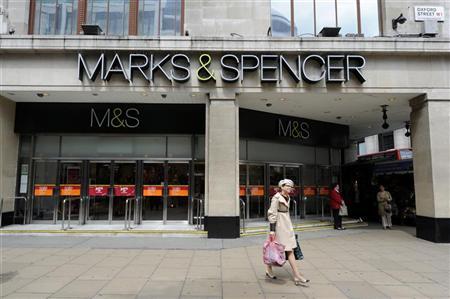
Photo Credit: Reuters/Paul Hackett
As for the actual financial performance, Marks and Spencer have posted the worst trading results in three years, with clothing and homeware down 6.8 per cent. The company said that clothing sales had been affected by stock issues, as well as the wet weather. In the first half of the year, M&S said it had run out of some of the best selling womenswear. These are the weakest set of quarterly figures the retailer has published since spring of 2005. Food sales in the UK rose 2.9pc but this was not enough to offset the slump in general merchandise, dragging total group sales down 0.7pc
Photo Credit: ASOS
In contract ASOS has had an impressive year, posting results ahead of expectations. Profits jumped 43% to £40.9 million. Revenues also showed strong growth, with the company taking £495 million compared with £340 million the previous year. The company’s international business lead the growth, with sales up 103% over the period, while UK sales only grew 7%. Australia, Russia, Singapore and China were highlighted as sales-boosting countries, while new websites were launched in Italy, Spain and Australia.
Above financial highlights drop enough hints about the reasons behind this contrasting performance:
  • Focus on international growth strategy and its successful execution
  • Successful adoption of new and evolving retail technologies
  • Product and portfolio innovation
  • Identification and strategy for growth customer segments
  • Better Supply-Chain integration with new technology distribution models
  • and i am sure there are a few more core retail seasonal trends, weather impact etc.
Let me also qualify my thinking on this blog by stating that though these are contrasting results, I have no doubt that M&S is and will remain one of the strongest retailers of the conventional high street model. And even M&S is implementing a few new technology led multi-channel strategies successfully. However, the new and evolved Retail Reference Architecture continues to differentiate ASOS from its conventional competitors. And to an extent, retailer like ASOS is creating new market places where traditional retailers are struggling to reach and expand. The company’s website attracts 16.6 million unique visitors a month and had 8.7 million registered users at the end of June. Technology is a key enabler for ASOS and this is proven by the fact that, ASOS sells more than 50,000 branded and own-label product lines, with around 1,500 new lines being introduced each week. This is agility in action and this is yet again a classic case study of how technology can truly provide a competitive advantage to business and operations of an enterprise.

References:

Contrasting Tale of Two Retailers – ASOS and Marks & Spencer

I have been regularly tracking the developments for both these retailers over the past few years on my blogs. But the growing contrast between their performance couldn’t be more obvious than comparison of latest financial performance numbers. To be fair, M&S and ASOS is not a like for like comparison. M&S is your traditional, conventional, respected high street retailer. Probably in league of its own along with only a few other retailers such as John Lewis. While ASOS is the new kid on the block, fresh, young, vibrant and bold online retailer who has challenged every conventional retail wisdom and won almost on all occasions. Both are highly successful and set benchmark in a way for their respective retail segments. Hence the comparison is far more interesting because, in reality this is not so much a comparison between two retailers rather between two different retail business models. 
Photo Credit: Reuters/Paul Hackett
As for the actual financial performance, Marks and Spencer have posted the worst trading results in three years, with clothing and homeware down 6.8 per cent. The company said that clothing sales had been affected by stock issues, as well as the wet weather. In the first half of the year, M&S said it had run out of some of the best selling womenswear. These are the weakest set of quarterly figures the retailer has published since spring of 2005. Food sales in the UK rose 2.9pc but this was not enough to offset the slump in general merchandise, dragging total group sales down 0.7pc
Photo Credit: ASOS
In contract ASOS has had an impressive year, posting results ahead of expectations. Profits jumped 43% to £40.9 million. Revenues also showed strong growth, with the company taking £495 million compared with £340 million the previous year. The company’s international business lead the growth, with sales up 103% over the period, while UK sales only grew 7%. Australia, Russia, Singapore and China were highlighted as sales-boosting countries, while new websites were launched in Italy, Spain and Australia.
Above financial highlights drop enough hints about the reasons behind this contrasting performance:
  • Focus on international growth strategy and its successful execution
  • Successful adoption of new and evolving retail technologies
  • Product and portfolio innovation
  • Identification and strategy for growth customer segments
  • Better Supply-Chain integration with new technology distribution models
  • and i am sure there are a few more core retail seasonal trends, weather impact etc.
Let me also qualify my thinking on this blog by stating that though these are contrasting results, I have no doubt that M&S is and will remain one of the strongest retailers of the conventional high street model. And even M&S is implementing a few new technology led multi-channel strategies successfully. However, the new and evolved Retail Reference Architecture continues to differentiate ASOS from its conventional competitors. And to an extent, retailer like ASOS is creating new market places where traditional retailers are struggling to reach and expand. The company’s website attracts 16.6 million unique visitors a month and had 8.7 million registered users at the end of June. Technology is a key enabler for ASOS and this is proven by the fact that, ASOS sells more than 50,000 branded and own-label product lines, with around 1,500 new lines being introduced each week. This is agility in action and this is yet again a classic case study of how technology can truly provide a competitive advantage to business and operations of an enterprise.

References:
ASOS