The importance of context

I am about to display my programming roots. History alert.In a far off kingdom computers were made by an all powerful company – called IBM. IBM had the most magnificent Operating System, inventively called “OS”. This operating system came in a number o…

The importance of context

I am about to display my programming roots. History alert.In a far off kingdom computers were made by an all powerful company – called IBM. IBM had the most magnificent Operating System, inventively called “OS”. This operating system came in a number o…

EA Heuristic #4: Collect and analyze data with reusability in mind

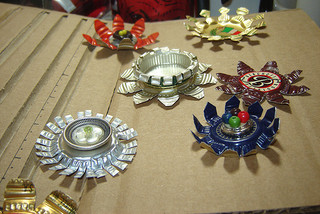
Metal Bottle Cap Flowers (credit: urban woods walker)
(this article is part of the series “12 Heuristics for Enterprise Architecting“)
EA exercises involve collecting a lot of data and distilling insights from them.  It seems wasteful if the fruits of these efforts are used just once and then thrown away.  Instead, when collecting data and doing analysis on them, it is useful to think about how the data and analysis can be re-used.

Specifically, as discussed in Heuristics #2: Guess, Validate, Iterate: Time-bound architectural efforts, the insights are likely to contain some inaccuracies, so expect gradual refinement of the data and analysis.  To do that, how the analysis is derived from the data should be clear.  In addition, involve as much as possible the people who are going to update it in the future.  The more familiar they are with the collected data and analysis, the more likely they will reuse it in the future.

During our EA exercise, we created a chart showing the key products offered by the organization, along with each product’s importance and satisfaction level.  We created a first draft of the chart, then we explained to the organization how we did it, and then they refined it.  We hope that they will reuse this chart, and we are more confident of it since they have already updated it once.  In addition, when we created the summary of our key findings, we tried as much as we can to resist the temptation of listing down gut feels and focus on findings that are backed up by data.
EA Heuristic #4: Collect and analyze data with reusability in mind

Metal Bottle Cap Flowers (credit: urban woods walker)
(this article is part of the series “12 Heuristics for Enterprise Architecting“)
EA exercises involve collecting a lot of data and distilling insights from them.  It seems wasteful if the fruits of these efforts are used just once and then thrown away.  Instead, when collecting data and doing analysis on them, it is useful to think about how the data and analysis can be re-used.

Specifically, as discussed in Heuristics #2: Guess, Validate, Iterate: Time-bound architectural efforts, the insights are likely to contain some inaccuracies, so expect gradual refinement of the data and analysis.  To do that, how the analysis is derived from the data should be clear.  In addition, involve as much as possible the people who are going to update it in the future.  The more familiar they are with the collected data and analysis, the more likely they will reuse it in the future.

During our EA exercise, we created a chart showing the key products offered by the organization, along with each product’s importance and satisfaction level.  We created a first draft of the chart, then we explained to the organization how we did it, and then they refined it.  We hope that they will reuse this chart, and we are more confident of it since they have already updated it once.  In addition, when we created the summary of our key findings, we tried as much as we can to resist the temptation of listing down gut feels and focus on findings that are backed up by data.

Wicked Problems

In last week’s post ,The problem With Problems, I presented a framework for defining and solving problems. I described how symptoms are often presented as problems, how the immediate situation exacerbates the problem, and how the context provides fuel to keep the problem nourished and growing. Three types of problems live within this framework: simple, […]