EA Heuristic #5: Address the concern of “you are echoing back what I told you”

(this article is part of the series “12 Heuristics for Enterprise Architecting“)

Stop parroting me! (photo credit: Ferran Pestaña

In some ways, the “as-is” phase of enterprise architecting exercises do not generate new content. It brings together observations from different parts of the organization and synthesizes them. Though the synthesis often produce “fresh” insights, these insights might seem obvious to the organization in retrospect, as they are often associated with pains that the organization has been suffering under. In our EA exercise, we received feedback on our “as-is” analysis that ranged from being “spot on” to “echoing back what I told you”, and that seem confusing until we sat down and analyzed the issue.

Learning from this experience, we could have explained to the organization why the EA team was not simply echoing back to them using the earlier mentioned logic. What we did do was to explain to them the EA methodology, and how we relied on it to systematically analyze the organization.

EA Heuristic #4: Collect and analyze data with reusability in mind

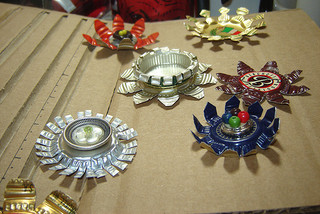
Metal Bottle Cap Flowers (credit: urban woods walker)
(this article is part of the series “12 Heuristics for Enterprise Architecting“)
EA exercises involve collecting a lot of data and distilling insights from them.  It seems wasteful if the fruits of these efforts are used just once and then thrown away.  Instead, when collecting data and doing analysis on them, it is useful to think about how the data and analysis can be re-used.

Specifically, as discussed in Heuristics #2: Guess, Validate, Iterate: Time-bound architectural efforts, the insights are likely to contain some inaccuracies, so expect gradual refinement of the data and analysis.  To do that, how the analysis is derived from the data should be clear.  In addition, involve as much as possible the people who are going to update it in the future.  The more familiar they are with the collected data and analysis, the more likely they will reuse it in the future.

During our EA exercise, we created a chart showing the key products offered by the organization, along with each product’s importance and satisfaction level.  We created a first draft of the chart, then we explained to the organization how we did it, and then they refined it.  We hope that they will reuse this chart, and we are more confident of it since they have already updated it once.  In addition, when we created the summary of our key findings, we tried as much as we can to resist the temptation of listing down gut feels and focus on findings that are backed up by data.

A rant against 1:1

Everey now and again, I get really annoyed with sites that assume you have only one of something. “Please enter your email address” is a common request – except that I have several, and would like to have the opportunity to use any of them as my login …

EA Heuristic #3: Talk to more blind men to know the elephant

(this article is part of the series “12 Heuristics for Enterprise Architecting“)
Picture of an elephant in a gentleman outfit.  Enterprises are like elephants, much bigger than this one, thus a lot harder for any person to get a correct whole picture of.
photo credit: Murilo Morais 
Enterprises are like often like elephants and the enterprises’ employees and stakeholders are like blind men in the classic story; they are each touching a different part of the enterprise and they will each describe the enterprise differently, sometimes in significantly different ways.  As such, though it might seem obvious, it is important to talk to multiple people, and if possible representatives of various stakeholder groups.  Moreover, what EA often reveals is the breakdown in information flow across the enterprise.

In our EA exercise, we got employees of the organization to suggest ideas.  In order to encourage more ideas to be contributed, we make it safe for idea contributors by not tagging names to ideas.  Later, when we evaluated the ideas, we observed that some ideas suggested by one employee was labeled as “we are already doing this” by another employee.  Clearly the initiative in question was seen as an area of improvement in the eyes of the first employee, but seen as completed in the eyes of the second.  This was a good example of different perspectives on the state of the enterprise.

Modernizing Enterprise Architecture: Address The Neurosis of IT

“TCP/IP and Ethernet will not be accepted as a valid network implementation as SNA and Token Ring are our preferred standards.” – circa 1993 by nameless corporate Information Systems expert. I was shocked when I had heard this, and images of ostriches with their heads in the sand immediately came into mind. I was new…

EA Heuristic #2: Guess, Validate, Iterate: Time-bound architectural efforts

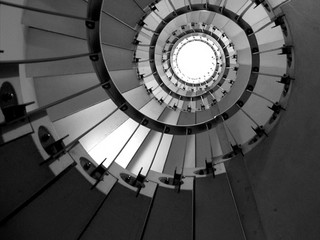
The spiral.  Architectural efforts should use this shape as the guide, doing quick iterations that each bring the effort closer to the end goal, but never getting held back from progress by attempts for perfection.
photo credit: the pale side of insomnia

(this article is part of the series “12 Heuristics for Enterprise Architecting“)
It is very difficult to document various aspects of an organization to the lowest level of detail or even to document the high level views correctly. To begin with, people have different views of the organization so the one correct viewpoint might not exist. As such, it is important to recognize that EA artifacts are living documents and they will never be 100% accurate. 

Consequently, time-bound architectural efforts to ensure consistent progress. Guess and validate later when there is missing information. Allow for iterations to gradually refine EA artifacts.

In our EA exercise, we planned a survey early in the exercise to solicit information on stakeholder importance. The organization rejected the survey, so we created the stakeholder importance chart based on our assessment. During subsequent presentations, the organization’s executives provided inputs that helped us refine the chart. Reflecting on the incident, it would have caused us unnecessary time and grief if we did not move on but instead wait on getting that chart right first.