Thanks to a great post from Ivo Velitchkov which unplugged some thinking of mine I was able to put some words around a couple of ideas and approaches I use. One post about Communication rather than creating an aligned (meaningless) language and a second post about truly Bridging the Silos instead of creating a new Enterprise Architecture silo.
So here another quote from Ivo:
EA is often in the position to attract some serious budgets for reasons we’ll see in another dream, and this way the new island becomes a safe territory for people that have either failed or lost interest in the pure IT. This as a result further decreases the credibility of EA which slowly, in some organisations, gets the image of a place for people that are not good enough for IT and prefer to hide under EA labels where things are vague enough and much more difficult to measure. The lost credibility either undermines the work of the really good EA practitioners or pushes them out of the organisation or both.
This immediately reminded me of an Enterprise Modelling Anti Pattern from Scott Ambler the so called Enterprise Parking Lot. Here a quote from Scott:
Your enterprise modelling group is composed of a lot of very smart people who don’t fit in well anywhere else within IT but you don’t want to lose their knowledge.
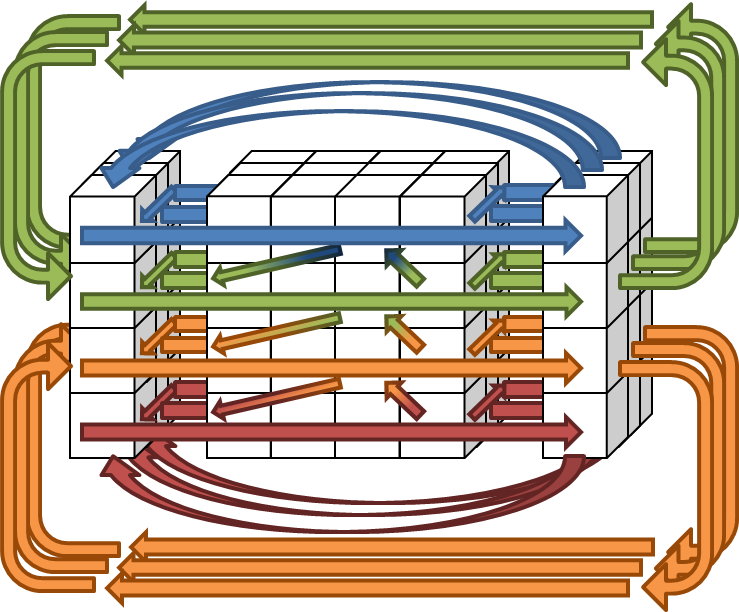
I personally have often observed a combination of both and therefore I phrase it the Capability Cemetery. So how to fix or handle this? First of all I am typically looking at each individuals capability. It is fairly seldom the case that there is people who try to avoid working under all circumstances, even thought that happens now and then. In most cases there is a deficit or GLUE Disease somewhere, a conflict between the organization setup (be it structural, process, project or any other organization) and the way the individual person is willing to operate. Typically, via investing in the interesting to reveal the relevant, it is possible to dig out the real root cause of the problem. Knowing the root cause then allows to optimize the information flow through the circulatory GLUE Cube.
Showing the people in the Capability Cemetery a clear path how they can utilize their knowledge and bring the highest possible value to the success of the company typically creates a buy-in situation of the members in the Capability Cemetery, especially if the value becomes visible and is recognized by the relevant people (which might be decision makers). Moving that overall Capability Cemetery now step-by-step into a well respected (Enterprise) Architecture Community will generate also organizational buy-in on the go towards a situation where no-one will ever question the value of the Enterprise Architecture. Communication is (once more) the absolute key element for success here.
As always, I need your input to improve and I do love knowledge exchange, so please forward your comments and thoughts.