Hurricanes and an Architecture for Process

The idea for this post came from a previous post on this blog regarding enterprise architecture and religious organizations.

Definitions or Definitional Taxonomies

There are three definitions that are needed to understand this post; the definition of Architecture, process using the OODA Loop, and the Hierarchy of Knowledge.  These are somewhat personnel definitions and you may interpolate them into your model universe.

Architecture

Architecture—A functional design of a product, system, or service incorporating all the “must-do” and “must-meet” requirements for that product, system, or service.

OODA Loop

All processes supporting the mission, strategies, or infrastructure of any organization fall into the OODA model of Col. John Boyd.  The OODA, as discussed in several previous posts includes four steps: Observe, Orient, Decide, and Act.  I will discuss this shortly (below) using the example of the prediction of a hurricane.

A Taxonomy for the Hierarchy of Knowledge

I defined the following taxonomy of knowledge based on much reading and some thinking.  I will demonstrate what I mean for each definition by using it in the appropriate place in my example of the hurricane prediction.
Datum—some observation about the Universe at a particular point in four dimensions

Data—a set consistent datum

Information—patterns abstracted from the data.

Knowledge—identified or abstracted patterns in the information.

Wisdom—is the understanding of the consequences of the application of knowledge

Process Architecture and Forecasting Hurricanes

Since the process for predicting or forecasting hurricanes is most likely to be familiar to anyone watching weather on TV, it is the best example I can think of to illustrate how the OODA Loop process architecture works with the taxonomy of knowledge.

Observe

Initially, data is gathered by observing some aspect of the current state of the Universe.  This includes data about the results of their previous actions.  In point of fact,

Datum—some observation about the Universe at a particular point in four dimensions

Data—a set consistent datum

Obviously observations of current temperature, pressure, humidity, and so on, are basic to making weather forecasts, like the prediction of a hurricane.  And each observation requires latitude, longitude, height above sea level, and the exact time to be useful. So one datum, or data point would include, temperature, latitude, longitude, height, and time.

When the temperature is measured at many latitudes and longitudes concurrently, it produces a set of temperature data.  If other weather measurement, like pressure and humidity, are taken at the same locations at the same time, then you have several data sets with which to make a forecast (or a composite weather data set for a particular time).  Because this is a recurrent measurement process, the weather folk continue to build a successively larger composite weather data set.  But large data sets don’t make a forecast of a hurricane.

Orient

The Orient step in the process is inserting the new data into an individual’s model of how the world (Universe) works (descriptive) or should work (prescriptive).  These models are sometimes called paradigms.  Rules from Governance enable and support the Orient step, by structuring the data within the individual’s or organization’s model.  Sometimes these model or paradigms stick around far after they have demonstrated to be defective, wrong, or in conflict with most data and other information.  An example would be the model of the Universe of the Flat Earth society.

Information—patterns abstracted from the data.  This is the start of orienting the observations, the data and information.  Pattern analysis, based on the current model converts data into information is derived from the organization’s model of its environment or Universe.  For hurricane forecasting this would mean looking for centers of low pressure within the data.  It would also include identifying areas with high water temperatures in the temperature data, areas of high humidity, and so on.  This and other abstractions from the data provide the information on which to base a forecast.  But it is still not the prediction of a hurricane.

Knowledge—identified, combined, or abstracted patterns in the information.  Using the same paradigm, environmental model, or model Universe, people analyze and abstract patterns within the information.  This is their knowledge within the paradigm.  In weather forecasting the weather personnel uses the current paradigms (or information structures) to combine and abstract the knowledge that a hurricane is developing.

When they can’t fit information into their model, they often discard as aberrant, an outlier, or as an anomaly.  When enough information doesn’t conveniently fit into their model the adherents have a crisis.  In science, at least, this is the point of a paradigm shift.  And this is what has happened to weather forecasting models over the past one hundred and fifty years.  The result is that the forecasting has gotten much better, though people still complain when a storm moves off its track by fifty miles and causes unforecast wind, rain, and snow events.

Decide

Once the organization or individual has the knowledge, he or she uses input their knowledge within their models of the Universe to make decisions.

Wisdom—is the understanding of the consequences of the application of knowledge. 

This is the hard part of the OODA Loop because it’s difficult to understand both the consequences and the unintended consequences of a decision.  If your paradigm, environment, or Universe model is good, or relatively complete, then you’re more likely to make a good decision.  More frequently than not people make decisions that are “Short term smart and long term dumb.” 

Part of the reason is that they are working with a poor, incomplete or just plain wrong paradigm (view of the world or universe).  This is where the Risk/Reward balance comes in.  When choosing a path forward, what are the risks and rewards with each path?  [Sidebar:  A risk is an unknown and it is wise to understand that “you don’t know what you don’t know”.]  For weather forecasters it’s whether or not to issue a forecast for a hurricane.  To ameliorate the risk that the are wrong, weather forecasters have invented a two part type of forecast, a hurricane watch and a hurricane warning. [Sidebar: It’s split more by giving a tropical storm watch and warning.]

The reason for this warning hierarchy is that the weather forecasters and services are wise enough to know the public’s reaction to warnings that don’t pan out and lack of warnings that do; they understand the risks.  So when they give a hurricane warning, they are fairly sure that the area they have given the warning for will be the area affected by the hurricane.

Act

Once the decision is made people act on those decisions by planning a mission, strategies, and so on within their paradigm.

For governments and utilities in the U.S. this means putting preplanned hurricane preparations into effect.  For people this generally means boarding up the house, stocking up on food, water, and other essentials or packing and leaving.  And for the drunk beach comber this means grabbing the beers out of the frig, and either heading to the hills or back to the beach to watch the show.

Programmed and Unprogrammed Processes

In the 1980s I wrote a number of articles on process types.  After doing much research and much observation, I came to the obvious conclusion that there are two types of processes, Programmed, and those that I will call Unprogrammed and which includes design, discovery, and creative processes. [Sidebar: These three sub-types differ in that design processes start from a set of implicit or explicit customer requirements, discovery processes start from inconsistencies in data or in thinking and modeling the data, and creative really have no clear foundation and tend to be intuitive, chaotic, and apparently random.] 

Programmed Processes

Programmed processes are a set of repeatable activities leading to a nearly certain outcome.  Almost all processes are of this type.  The classic example is automobile manufacturing and assembly.  Since they are repeatable how does the process architecture model apply?
The short answer is to keep them repeatable and to increase their cost efficiency (that is making them less expensive in terms of time and money to create the same outcome).

Keeping Programmed Processes Rolling

To keep your truck or car operating requires maintenance.  How much and when is an OODA Loop process.  For example, you really should check your tires, both for wear and pressure regularly; otherwise the process of driving can become far too exciting.  So you are in the “observe” step.
As the tires wear out or lose pressure too often, the data set becomes information triggering the “orient” step in the process.  At this point a driver starts to gather data on which tires are wearing fastest and where on the tire they are wearing.  This last point may indicate that tire rotation is all that’s needed.
Based on this data our driver models the information (using the computer between his or her ears) to determine how much longer it’s safe to drive on the tires.  Based on results of that model, the driver will “decide” to buy tires, rotate tires, or wait a little longer.  [Sidebar: Actually, many drivers will go through the buy/wait decision based on additional data, the cost of new tires, and their budget.]  The driver will then “act” on the decision, either get new tires or wait (which is really an action).
The point here is that like everything else in our Universe, over time, everything breaks down; so repeatable processes require an OODA Loop process to maintain them.

More Cost Efficient

However, the OODA Loop process architecture elucidated here is important for programmed processes for another reason.  For repeatable processes the key OODA process is always how to make the faster, cheaper, or making a higher quality product at the same or lower price, and producing it in the same or less time.
This is famously what Adam Smith described in his pin example in the first chapter of “The Wealth of Nations”. By creating an assembly line process that he called “the division of labour”, he demonstrated that the same number of workers produce hundreds of more pins.  He went on to describe that each worker might now invent (or innovate, that is, refine or enhance) tools for that worker’s job. [Sidebar: Henry Ford went on to prove this in spades or should I say Model-T’s.]  [Sidebar: To me the worker’s inventing or innovating tools to help them in their job is quite interesting and often missed.  Tools are process or productivity multipliers.  In the military they are called force multipliers; you always want your enemy to bring a knife to your gunfight, because a rifle multiplies your force.  Likewise, the tooling in manufacturing can increase the quality of the product, the uniformity of what is produced, while reducing the cost and time to produce…fairly obvious.]
Both the “division of labour” and the creation of tooling require the use of the Architectural OODA Loop, which means that increasing the cost efficiency of manufacturing uses the OODA Loop with the knowledge taxonomy.

Unprogrammed Process

Unprogrammed processes have stochastic (creative and unplanned activities within them).  There are really three sub-types of unprogrammed processes, design, discovery, and creative. The key differences between the design, discovery, and creative processes are the whether the process has customer requirements driven and what the requirements are.

Design

The design process has customer requirements.  [Sidebar: As I’m using it, the design process also includes custom development, implementation, and manufacturing.]  It uses a semi-planned process, that is, program or project planning creates a plan to meet the objectives, but with latitude for alternative activities because there is significant risk.  The actual design activities within the programmed process are stochastic, from a program management perspective.  That is, the creative element of these activities makes less predictable, and therefore with programmatic risk with respect to cost and schedule.  Therefore, program management must use (some form or) the OODA architecture to manage the program or project.
The stochastic activities are themselves OODA Loop processes.  The designers have to identify (observe) detailed data of the functions they are attempting to create (the “must do” requirements), while working to the specifications (the”must meet” requirements) for the product, system, or service.  The designers then have to “orient” these (creating a functional design or architecture for the function), “decide” which of several alternate proposed designs is “the best”. Finally, they “act” on the decision.

Discovery

The requirements for research, risk reduction, and root cause analysis are generally unclear and may be close to non-existent.  One of my favorite research examples, because it’s well known, and because it so clearly proves the point is the Wright Brothers researching and developing the aircraft.  In 1898 the brothers started their research efforts.  Starting with data and information then publicly available they built a series of kites. With each kite, they collected additional data and new types of data.  They then used this to reorient their thinking and their potential design for the next kite.  They found so many problems with the existing data that they created the wind tunnel to create their own data sets on which to base their next set of designs.  By the end of 1902 they had created a glider capable of controllable manned flight and by 1903 they created the powered glider known as the Wright Flyer.  It took them at least two more cycles of the OODA Loop to develop a commercially useful aircraft.
Risk reduction also uses the OODA Loop.  A risk is an unknown.  It requires some type of research to convert the unknown into a known.  There are four alternative.  First, the project/research team must decide whether or not to simply “accept” the risk. Many times the team orients the observed risk in a risk/reward model and accepts the risk.  However, another to orient is to determine if there is knowledge or knowledgeable people to convert the unknown into a known. So “transferring” the risk is one way to reduce the risk.  A second method is to “avoid” the risk.  This means redesigning the product, system, or service, or changing the method for achieving the goal or target.  The final way is to “mitigate” the risk.  This is nothing short of or more than creating a research project (see above) to convert the unknown into a Known.
Likewise, root cause analysis is a research effort.  However, the target of this analysis is to identify why some function or component is not working the way it is supposed to work.  Again, its observing the problem or issue, that is gathering data, orienting it through modeling the functions based on the data, deciding what the cause is or causes are for the problem and how to “fix” the problem, and then acting on the decision.  Sound a whole lot like the OODA Loop.

Creative

Creative processes like theory building (both through extrapolation and interpolation), and those of the “fine arts” that come from emotions also use the Architecture of Process defined in this post.  For some theories and all fine arts, “the requirements” come from emotion, based on an intuitive belief structure [Sidebar: a religious structure, see my post on architecture of religion].  This intuitive structure provides “the data, information, and knowledge” on which the creativity builds.
However, for scientific theories, at least, they are sometimes based on inconsistencies in the results of the current paradigm.  The theorist attempts to define a new structure that will account for these aberrant data.

Why make a Deal about the Obvious?

To many it might seem that I’m making a big deal about what is obvious.  If it is the case, why hasn’t it been inculcated into enterprise architecture and used in the construction and refinement of processes and tooling to support the charter, mission, objective, strategies and tactics of all organizations?  Using formal architectural models like the architecture for process, presented in this post, will enable the enterprise architects to “orient” their data and information more clearly making Enterprise Architecture that much more valuable.

Found In Design

I’ve finally got around to shaping-up the sequel to “Lost In Translation” – the working title is “Found In Design”.I’ve decided to take, what you might call, an “unbook” (as in not a book) approach to this one. I will be writing and sharing early draft…

What’s My Function…Or Is It Non-Function?

One of the substantial differences between an architect and a software developer is regarding requirements. In general, a developer is concerned with functional requirements while an architect is concerned with non-functional requirements. Of course, there is some overlap between each requirement type and the type of person focusing on each, but that is generally how […]

Understanding the Customer Experience: A Conversation with Forrester Analysts David Cannon and David Wheable

By The Open Group With more technology in the hands of consumers than ever before, customers have become increasingly demanding in terms of not only the service they receive from companies but also the experience they have with your company … Continue reading

To Colonize Mars, Look to Standards Development

By The Open Group In advance of The Open Group San Francisco 2017, we spoke with Keegan Kirkpatrick, one of the co-founders of RedWorks, a “NewSpace” start-up focused on building 3D printable habitats for use on earth and in space.  Kirkpatrick … Continue reading

Gaining Executive Buy-In for IT4IT™: A Conversation with Mark Bodman

By The Open Group With many organizations undergoing digital transformation, IT departments everywhere are taking serious hits. And although technology is at the heart of many business transformations, IT has traditionally had a reputation as a cost center rather than … Continue reading

Actions Speak Louder Than Words


In the last episode of the ACME E&L story, we left the CIO, Colin Black, musing how he was going to explain Cloud-Native “Unicorn” thinking to the Exec Board. After a few moments of reflection he decided a two-pronged approach would be best:
a)  Gradually introduce new concepts such as “Safe Fail”

b)  Demonstrate he could deliver business-relevant outcomes quickly.

Pragmatically, he reasoned focusing on the latter was his priority. The current highest priority for the Board was the impending merger with ACME’s second largest competitor. The newly merged company, MACME Plc. would be launching in just a few weeks – and the Board decided it needed to establish a new corporate identity and culture from day one. The CIO suggested this would be an ideal time to move all employees to a new email and office tools platform. He reasoned that email addresses would change under the MACME brand anyway and it would also be a good opportunity to create a MACME Branded intranet portal to help build the new culture.

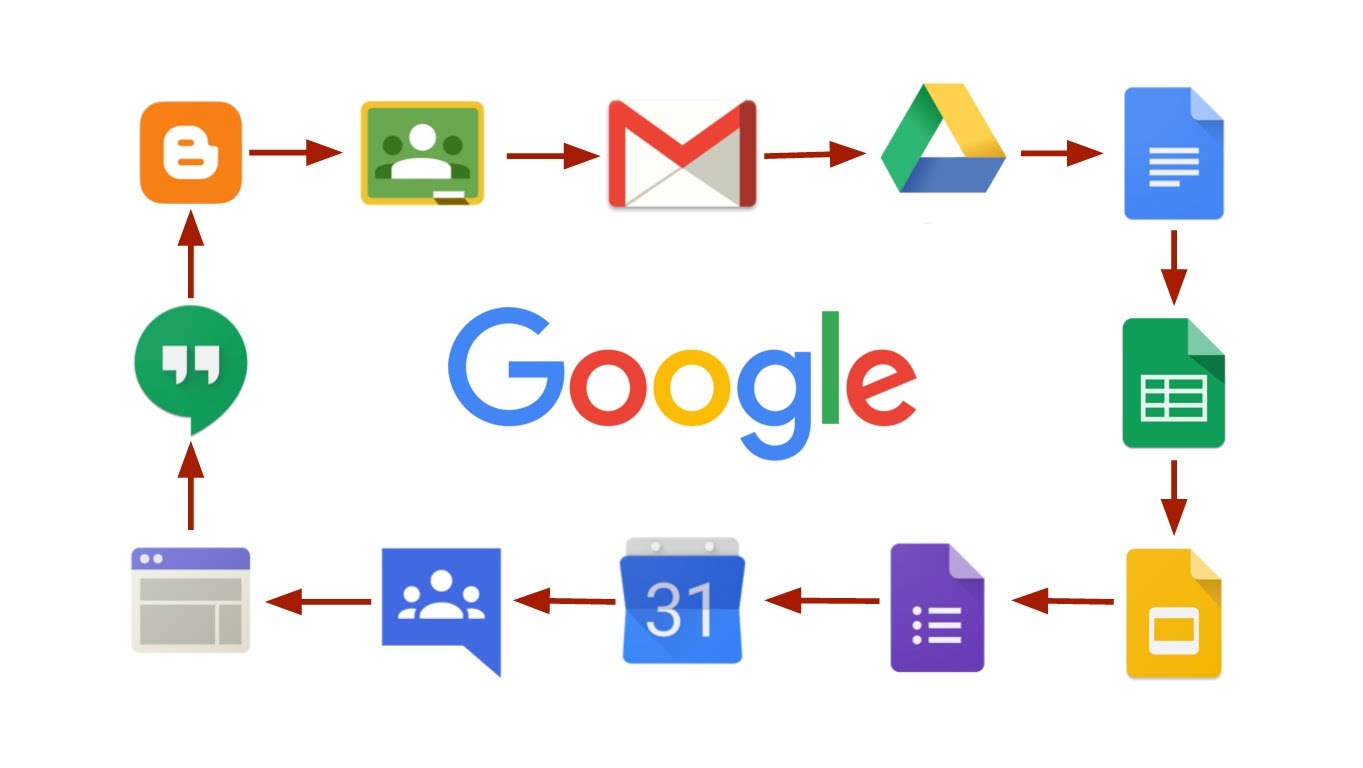
This episode of the story is an interview with the Project Manager, Mr Olivier Gris, leading the transition from Microsoft Exchange to G Suite at ACME E&L Ltd. Olivier has worked with the CIO in the past and is regarded by him as his most trusted PM. In this interview, with a technology journalist, Mr Gris explains how he led his team to get 10,000 employees to a single instance of G Suite in 10 weeks. He discusses the ups and downs of the project, and most importantly the lessons learnt. He also explains, right up front, why this project fits with the CIO’s “Think Like a Unicorn” mantra and how emerged as a trust-winning strategy for the CIO with the entire business.

This story is a real company and a real project. The company identity and the character’s names have been changed.

***

Why did the CIO decide to use Google G Suite?

“Several reasons; The CIO wanted to ensure IT was in-line with the retail Entertainment and Leisure business, where revenue directly proportional to service availability. And, in increasingly ‘Digital World’, he knew IT had a strategic role to play”.   

“The CIO has a bias towards Cloud (and Google’s G Suite, in particular, due to earlier successes). The firm was heading for a merger, and the CIO wanted to make sure the new merge-co (MACME E&L) would be ‘born into a Digital World’ from the get go. The company being acquired already used Google G Suite, yet ACME E&L, the acquiring company used Microsoft Exchange. So he felt it was a no-brainer to follow the one that already ‘lived’ in the Cloud”.

“He favoured for SaaS on the Cloud for 3 main reasons;

  1. The software is constantly updated – no massive change plans required, instead, lots of small increments; little triangles of risk as opposed to one big one.
  2. People were increasingly working from home and they wanted a consistent experience.
  3. Online collaboration would be far easier – anytime, anywhere”.
“The company being acquired already used G Suite, but had actually created three separate instances. This turned out to be a questionable decision for a number of reasons:

  • They outsourced a problem; a troubled service, taking its troubles with it.
  • Unfounded security fears; Head Office was concerned that the shop staff might take a more cavalier attitude towards security and compromise the whole business.
  • Not fully appreciating that G Suite was built with strict security policies in mind, which could be configured to prevent cross-contamination between the shops and the Head Office.
  • Not believing that Google’s DC level security was likely to be far more robust than anything the could implement in their own DCs. This motivated by the fact that a hack into Google would be a very newsworthy event compared to a hack into their DC.

So, with those points in mind, he felt it was a ‘given’ go for one instance of G Suite for the whole MACME E&L business”.

Was there an ROI calculation for this project?

“No, there wasn’t a formal benefits case. Things were moving quickly,; the business had bigger-fish-to-fry with the impending merger. The merger was costing money on a daily basis, largely to do with the sale of real estate and conditions set by the regulator. So there wasn’t ROI per se. What convinced the Board was that running two different platforms would be crazy, and that deployment Cloud was low-risk for office tools. And that, combined with ‘The Sword of Damocles’ of day one of the merger, meant something had to be done fast. They also saw the value of one platform bringing staff together after the merger. For those reasons, the Board was happy to support the CIO’s recommendation without doing a formal ROI”.

What were the steps and how long did it take?

“The steps at a high level were a bit unusual, mostly due to complications imposed by regulator – we weren’t allowed to share any corporate data ahead of the merger as the regulator deemed they may be a risk of competitive advantage. So nothing between the two pre-merger firms could be shared before day one of the merger. They did, however, allow us to set empty email accounts for the company being acquired within ACME E&L. That meant running a mirror instance then switch to single instance later, and then merge two Google G Suite instances. This all took a while to agree with the regulator and resulting the final decision on how to handle the two firms data was made just 7 weeks before the merger. This created a challenging set of constraints on both pace and approach. In the end, we managed to transfer most of the data (held in a dormant state) in batches over 4 weeks”.

Is there a long-tail of users yet to adopt?

“We were close to 100% users set up and running within 8 weeks. One or two people might’ve been missed due to Maternity leave, or similar. But we think we have caught those by marrying up Active Directory entries with HR records”.

“We’re planning to fully decommission Exchange early in the New Year (around 10 weeks after go live). We need this extra time to recreate distribution lists, transfer archived mail, and deal with automated email-based workflows”.

“So, in summary, we went from zero to 98% of our users up and running on G Suite in 5 weeks – and the remainder 4-5 weeks later”.

How many users now?

“We now have around 10,000 users on G Suite since the merger. Around half of these transitioned from Exchange whilst the other half were consolidated onto a new G Suite instance. Interestingly, the Google to Google transfer was more technically challenging in some ways; the tools available for Exchange to G Suite are very mature, however, this wasn’t the case for G Suite to G Suite, so the latter was more ‘hand-balled’”.

What were the biggest hurdles?

“We had a few unusual issues to contend with; for example, someone in Asia had hijacked the domain name we wanted for the merged company. This meant we had to work with our legal team to get that fixed, and that added pressure to the schedule. But, I’d say the people related issues were the biggest. We had underestimated how fond people were of Microsoft Exchange email. It’s very mature and people like it. For many, Google G Suite was seen a step backwards; email is what they see every day and, at first, many didn’t like the switch to browser-based email. On top of that, they didn’t see the advantages of the move to G-Suit in things like collaborative and home working. To tackle this, we took a viral approach to adoption; we sought-out enthusiastic supporters and helped them spread the word. We ran ‘Right-Fit’ workshops with the users where we discussed the pros and cons of G Suite and shared ideas and use cases (from previous workshops). It was important to hear the user’s voice and, then help them get the most from the tools; these were not training sessions – they were interactive workshops“.
“Probably the most compelling use case for the shops was around Google Forms & Sheets; for example, data sets for performance, schedules and promotions could be shared with the Head Office & other stores, faster and more accurately using Forms and Sheets. This resulted in many hours of saved at the retail outlets”.
What was the user feedback?

“The user feedback from retail area managers has been superb. We conducted a few sample surveys after we’d run the ‘Right Fit’ workshops – the results speak for themselves: ratings rose from a mark of 1 to 5 before the workshop, to between 6-10 afterwards. Workshop attendees were asked to rate Google G Suite pre and post training (1 being ‘Poor’ and 10 being ‘Awesome’)”.


Figure 1 Feedback from area managers across two regions of the U.K.

 Southeast Region


Midlands


Feedback from Head Office staff was less enthusiastic at first. However, many are now seeing the benefits of collaboration and remote working.

We had to be realistic, not all users would like the change; for example, an Executive Assistant who manages multiple diaries finds this harder to do in Google calendar than in Exchange. Google Slides lacks functionality compared to PowerPoint, some complained about this, but others saw this as a good thing; they can focus on writing great content rather than be distracted by too many features and options. And then, there are some people, who just don’t like working in the Browser”.


What’s the best feature?
“I’d say Hangouts for Head Office, and Google Forms/Sheets for shops. Voice & video meetings on Hangouts becoming the norm. The users already understand the power of collaboration – both collaborative document building, and data sharing”.

What’s the least popular?

“The least popular app is Google Slides compared to PowerPoint and the management of multiple calendars. Other than that, spreadsheets with complicated rules and macros can be a challenge to recreate in Google Sheets. Having said that, some users are beginning to see advantages in using Sheets; for example, one recently built a spreadsheet that made use of easy access to other Google data to calculate the distance between two postcodes”.

“Uncovering large ‘Spreadsheet Apps’ was an interesting spin-off. We were looking deeper into the use of complex spreadsheets; these are the powerful spreadsheets, built by users, which have become important ‘Shadow IT’ tools that are now critical to the business operation. There’s probably a good argument to say these should be brought under more rigorous support as bona fide apps in the future”.

How does it fit the overall “What Would A Unicorn Do?” strategy?

“The retail industry has gone digital; our digital products are our lifeblood. This means the role of the CIO is more important than ever – and the Board is listening to the CIO. The CIO has made it clear that our move to the Cloud is key to improving service automation. The IT team must refocus on delivering outcomes for competitive advantage: ‘Build for Competitive Advantage – Buy for Competitive Parity’ is the mantra. In other words; ‘Don’t re-invent functionality that can be provided by commodity services’. Moving to Cloud-based offices tools is directly linked to the CIO’s strategy; He asks the question; Why don’t we manage IT services in the way the likes of that Amazon Netflix do?”.
From the CIO’s perspective, moving to G Suite was a tangible, and pragmatic step; a first move to digital without putting revenue generating systems/services at risk. This was his chance to show how his Cloud-native strategy will deliver results quickly. He could demonstrate tangible value, he believed he would show that: everybody in the firm would like the collaboration features, the shop staff would save time when sharing data and, for everyone, wasting time travelling to meetings would become a thing of the past. It turned out he was right”.

Did you feel the sense of strategic importance at the project level?

“Absolutely, we knew we needed to make new CIO look good, and it did the trick! Initially, there was a question about the wisdom of switching to G Suite in the midst of the merger, but we explained that we would be going through the pain anyway, so why not get it over with from the get go? We also helped make the case to take the opportunity to rebrand the merged company from day one of its operation; to access G Suite, users logged into to a new look & feel that told the MACME Plc story and the opportunity to collaborate with colleagues old, and new”.

Which of the CIO’s principles did this project support?

“The main principles we followed were:

The move to Cloud SaaS meant no more massive upgrades and, at the same time, providing services any time any place – at the desk, at home or elsewhere. The IT teams were not spending time on software upgrades and hosting of commodity services; the focus was on offering more differentiated services to our internal and external customers. We choose a tried-and-tested service from Google, and by Clouding rather than Outsourcing, commodity services were made much simpler to deploy and upgrade; we simply trust the provider to new helpful features and services incrementally, with no need for massive retraining programs”.

What were the IT savings?

“The IT headcount savings were minimal; a saving of around 8 outsourced FTEs. Rather than headcount reduction, people have more interesting jobs to do. In terms of assets, the Exchange infrastructure will be decommissioned in a few weeks time and we will reduce our CAPEX storage cost as we move away from shares on hosted disk”.
What has the project cost?

“The cost of transformation was about £1million. If you set this against roughly comparable yearly OPEX costs between the Microsoft Licensed model and the Google Service Fee model, and take into account the time saved across 5,000 retail outlets, the cost benefits case stands up. Not to mention the intangible benefits of improved collaboration, and anywhere working”.

Why Google G Suite over Microsoft Office 365 Azure?

“My last client was in Local Government, in their case they decided to switch to Microsoft Office 365.  Both the Google and Microsoft Cloud offerings stack-up against each other. The important point is, that in either case, software maintenance is simplified, as is the deployment of new functionality. We chose Google’s G Suite because the CIO had deployed it successfully before and was impressed by its simplicity and the rate of user adoption (particularly around collaborative working)”.

Are there organisations that should avoid SaaS office tools and if so why?

“Not many in my opinion. Organisations with highly sensitive data in – I’m talking ‘State Secrets’ here – would probably need special features and deployment models not available in commodity SaaS products. However, I believe, for most commercial organisations, their security concerns around the Cloud simply don’t stack up. Let’s face it, Google’s, Amazon’s or Microsoft’s Data Centres are going to be among the most secure in the world; they probably do a much better job of securing them than your company – a breach of security for them would be a much bigger headline!”.

“For a small business, it’s no-brainer!  However, at the other end of scale, companies with a lot of legacy ‘Shadow IT’ in complex spreadsheets and email-enabled workflow, might find the journey to SaaS more complicated and longer than ours.  For them, I’d recommend: the risk assessment be done scientifically, rather than emotionally, plan to implement in incremental steps, and listen and act on, user feedback at each increment”.
“Perhaps paradoxically, the tight time constraints imposed by the merger on our project was an advantage. The value of a single platform for the new company gained the attention of the Board, and that put pace and weight behind the project. I would recommend that any CIO thinking of moving to the Cloud find similar Board level support early on”.

“In summary, I would argue going Cloud is a much better way for delivering and managing IT services, and that a move to SaaS office tools is a relatively low-risk way to start that journey”.


Please follow me on LinkedIn or Twitter for future posts.
#horsesunicorns

What is Open FAIR™?

By Jim Hietala, VP, Business Development and Security, The Open Group Risk Practitioners should be informed about the Open FAIR body of knowledge, and the role that The Open Group has played in creating a set of open and vendor-neutral … Continue reading