Modeling Capability Increments and Capability Instances to Support Roadmapping
 So far in our blog series, the capability models we’ve used are relatively simple in terms of their structure. In our previous blog post on capability measurement, we already promised to provide more detail on how you can model capabilities over time and how to describe different instances. In larger organizations, the same business capability…
 ArchiMate is the modeling language of choice for most enterprise architects. When ArchiMate is communicated to a business audience, however, the default visualization is often perceived as too technical. To solve this, Bizzdesign is creating alternative ways of visualizing ArchiMate models, such as the Metro Map. The new Metro Map view visualizes dataflow or processes…
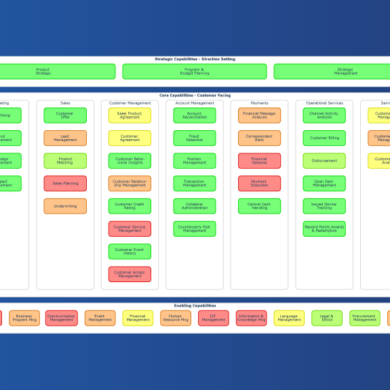 As we explained in our previous blog on capability assessment, to effectively assess Capabilities and execute Capability-Based Planning, we need to define three dimensions: Strategic Importance, Capability Maturity, and Adaptability, and measure them. Simply put, the first dimension lets you prioritize those capabilities that are most important to your enterprise; the second focuses on where…
 Capability-Based Planning activities are structured in a cycle: Map, assess, plan, and control. It shows us where to begin and the next steps to gradually increase the impact on the organization. Read more in our whitepaper: “How Business Architecture contributes to successful strategy execution”. In the “Map” phase, we define and create the Capability Map,…
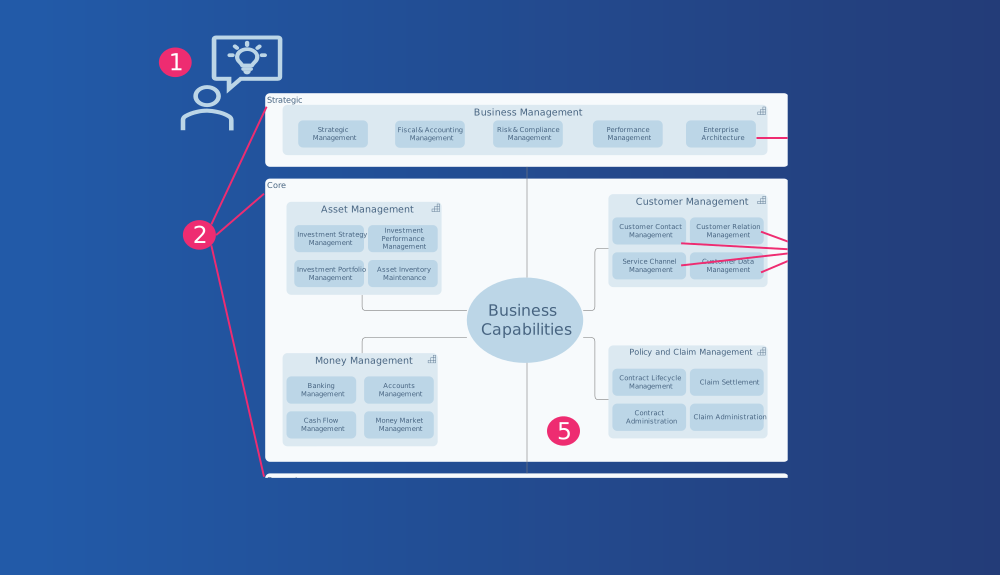 Value is delivered to the enterprise when Capability Maps are readily accepted and adopted as a strategic planning tool. Business stakeholders can make data-driven decisions and align and prioritize investment decisions, among others. In part 1 of our blog series on Business Capability Maps, we’ve identified design principles focusing on the stakeholders consuming the Capability…
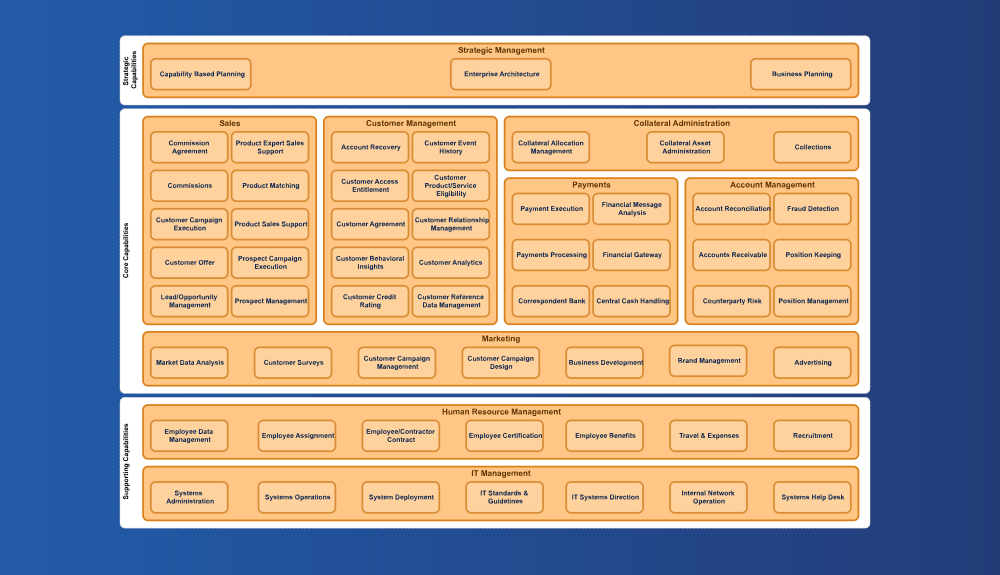 Business Architecture is nowadays gaining more traction among executives because it plays a key role in enabling organizations to transform into a composable enterprise, a term coined by research and advisory firm Gartner, Inc. Business Architecture is used by architects as a form of business analysis to identify business value that’s focused on what the…
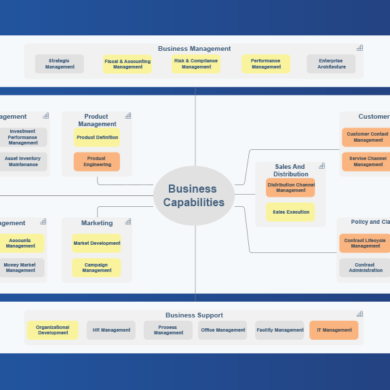 Business Capability Maps are used for a variety of strategic change purposes such as to align business leaders and other stakeholders on investment decisions. Capabilities are not IT concepts but are used to describe the abilities of an enterprise, i.e. what activities it’s able to do, either now or in the future, rather than how…
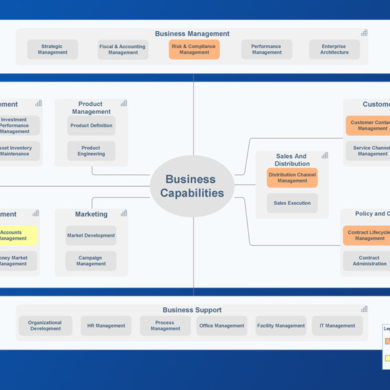 Today we live in a rapidly changing world. Senior management is faced with various change initiatives to improve the different functions of an enterprise. All of these change initiatives are backed by well-informed arguments and compete for budgets. Although strategic management has access to a vast amount of information and tools to support strategic, tactical,…
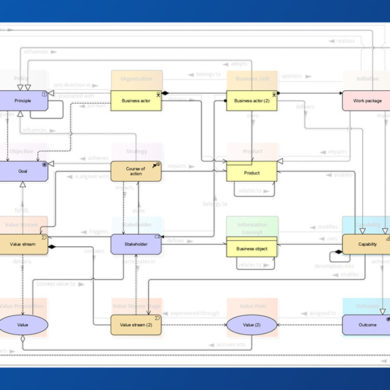 Since the foundation of the Business Architecture Guild a little over a decade ago, its Business Architecture Body of Knowledge (BIZBOK®), as expressed in the BIZBOK® Guide, has become a popular set of guidelines and techniques for practicing business architects. More recently, it has also defined its own metamodel, which you can read about in this whitepaper (published August…
 In the first instalment in this series, we gave an outline of the notion of ‘business capability’ and why it is so useful in strategy execution. But what exactly is this somewhat elusive concept and how do you define capabilities? As mentioned in that previous blog post, you need to understand and design what an…