Enterprise Architecture is evolving; the new generation of Enterprise Architecture methods finally achieving their goals to slash project times and reduce costs for organisations. This is critical as companies strive to increase their competitive advantage, optimise their operations, reduce costs and respond faster to market demands. To that end, Enterprise Architects have positioned themselves to provide advice on using IT as a strategic tool as part of the strategic decision making process with company directors.
Gartner heralds the impact of Enterprise Architecture (EA) on delivering business value through the strategic use of IT.
“Overwhelmingly we find EA practitioners focused on delivering on business value and strategic transformation,” said Philip Allega, managing vice president at Gartner. “Gone are the days of just ‘doing EA’ with little value or impact. Sixty-eight percent of organizations surveyed stated that they are focusing their EA program on aligning business and IT strategies, delivering strategic business and IT value, or enabling major business transformation.” [1]
Enterprise Architecture is supporting the development of IT operations and infrastructure into the new “Agile” paradigm. Enterprise Architecture needs to not only deliver value but accelerate projects, operations while speeding up delivery and time-to-value. Nautilus-PM [2] has chosen the open EA method to accelerate project management and development as it offers the most pragmatic approach to delivering incremental project outcomes without having to undertake the long winded processes commonly found in the traditional software and enterprise architecture development methods. The future is “Agile” with thought-leaders, such as Gartner predicting that by the end of 2012, agile development methods will be used on 80% of all software development projects [3]..
The Visual Enterprise Architecture shapes the project activities and approach. “Agile” demands a departure from the traditional waterfall approach to systems engineering that saw monolithic system development and implementation that took high level analysis through to detailed design. The complications arose as time elapsed and changes would require repeating analytical and design cycles, which proved to be cumbersome and difficult to manage. The “Agile” incremental approach to developing systems focuses on delivering prioritised clusters of system functionality for faster utilisation while planning subsequent increments of reprioritised functionality as the capability need grows. This enables a company to make operational use of these systems earlier, while giving it the flexibility to respond and grow in response to market and customer demand. A change in market demand can affect the prioritisation assigned to system functions, which can be brought into operation sooner if so required or can be postponed in favour of higher prioritised functionality. This approach has been used effectively in public sector organisations to streamline operations, reduce systems and infrastructure costs while enabling personnel to deliver greater value for money (VfM). The systems procurement and acquisition processes in public sector organisations have been scrutinised and found to cost too much money. Frequently, by using the traditional systems engineering methods, functionality and systems are obsolete by the time that they are delivered. Evaluations has found that the systems have been too late, over budget and lacking in the functional richness needed to provide user satisfaction.
The US DOD insist on an “evolutionary acquisition” approach for all identified natural systems, i.e. they buy a few items or the initial elements of the product, use it, learn from its features or performance, then develop it further, rather than trying (and failing) to specify all details from the outset [4].
The birth of the “Agile” approach to EA has not been without tears. Similarly, when the Object Oriented paradigm was introduced the “old guard” custodians of IT standards regaled “It will never work”. Agile has received the same cynicism until the weight and burden of demonstration has demanded a rethink. It is not surprising that with the weight of investment into the traditional methods of developing EA that there would be a resistance to the newer “disruptive” approaches. This has been a familiar pattern: companies who invested heavily in mainframe infrastructure resisted moving towards a flexible, open architecture due to their perceived investment in these old systems, it is a matter of time before the cost of maintaining older legacy systems outweigh the advantages realised by new methods, structures and systems.
Fortunately for organisations, the adoption of Enterprise Architecture to visualise Project timelines and roadmaps means that they do not lose their investment into their infrastructure but are able to redeploy resources and applications to leverage greater value and take control of their system portfolio.
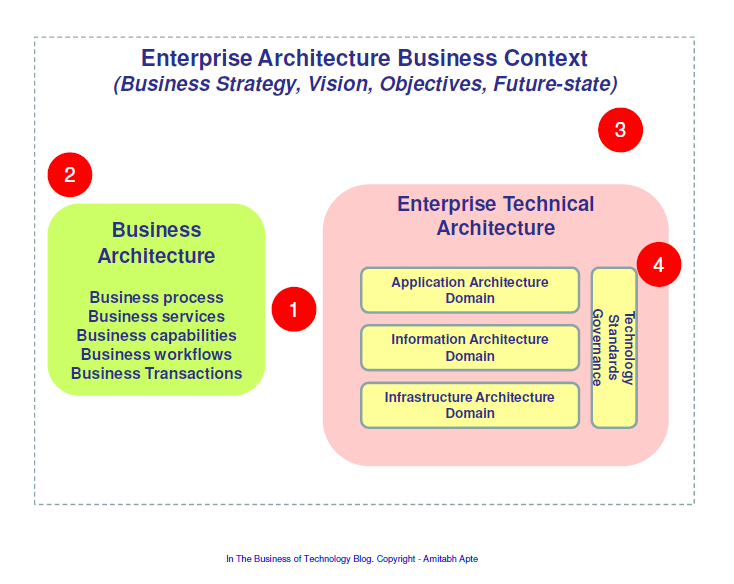
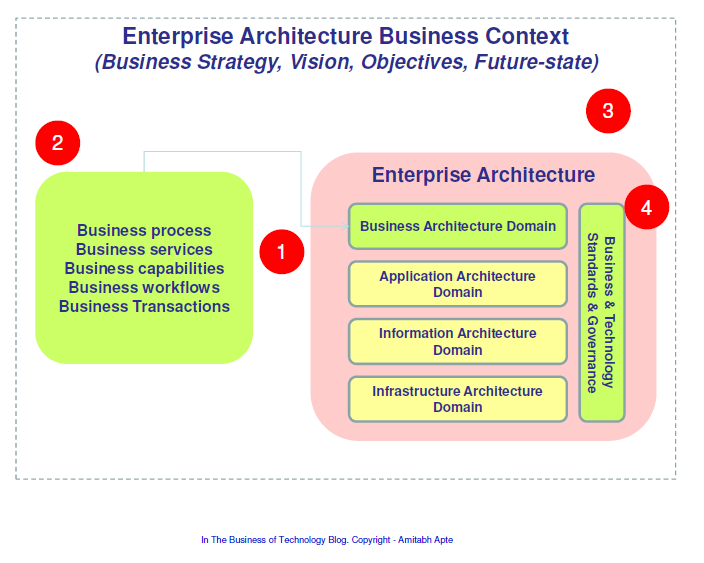
Enterprise Architecture builds on the creation of blueprints and enterprise maps that visualise Enterprise Views of concepts, issues, principles and key goals to build a common understanding across stakeholder groups. Having a unified view that supports discussions and decisions ensures the common ground for implementing evolving information systems and business processes. The Nautilus project CPM (critical path method) plans plug into this living enterprise view of road-mapping and time-lines.
While this approach may seem to be common sense to Boards of Directors, Funders and other Stakeholders, it is a new direction and a new paradigm for EA: This is The Visual Age. We have departed from the strict demarcation of Business – IT – Technical and Implementation Architectural views that have been promoted by methods and frameworks such as TOGAF. It advocates a leaner, compact and multi dimensional approach more akin to the Checkland [5]soft systems methodology with its World-view (Weltaanschaung) and focus on stakeholders, client views and business value. Engagement with business and IT communities and provision of a common natural language engenders strategic alignment and seamless threads from business vision and goals through to operations and infrastructure. The organisation begins to work and think like a total organism.
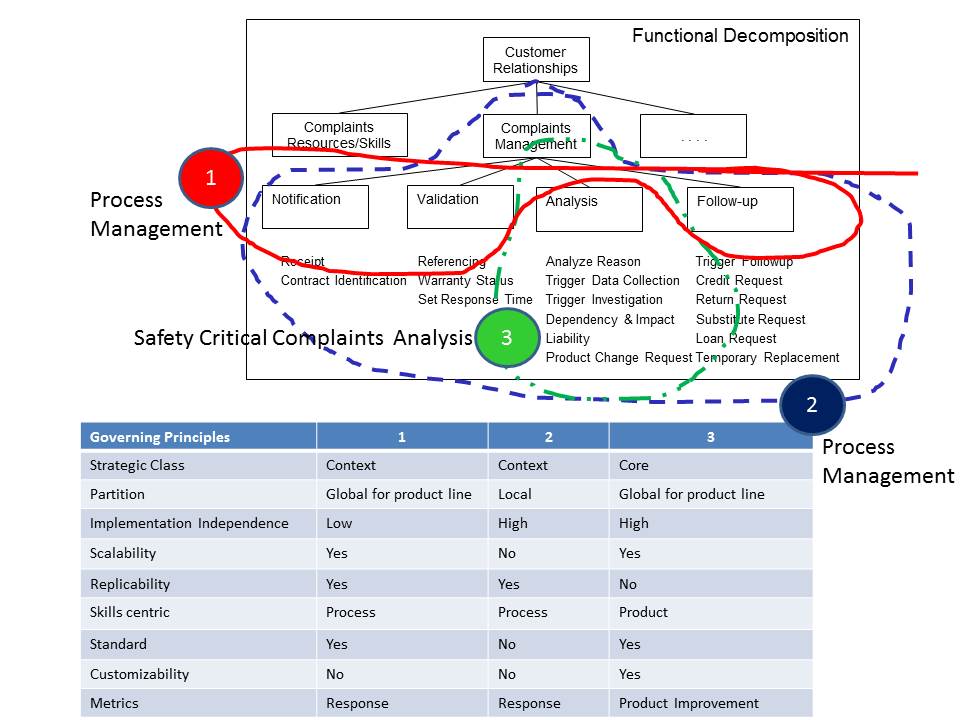
Through dialogue with key stakeholders and executing an “Agile” approach organisations and project boards enjoy results not within the average 12 months [6] that was the usual time taken using previous methods, but within 3 months. EA provides key actionable products and blueprints using language that management, developers and the wider community understand. This accelerated approach to visualising the key concerns, issues, concepts and requirements speed up decision making. The concepts illustrated relate to multi dimensional aspects of the enterprise. They represent aspects that need to be addressed and are illustrated in an “AS-IS” current picture of problem areas, and “TO-BE” solution concepts and goal situation. Each dimension is then worked down into their respective areas, such as information, business process, infrastructure and technology while maintaining correlation and interdependencies.
In summary, the new generation builds upon the natural world, is aligned with the demands and lessons learned from the traditional systems engineering while providing new agility to corporations and organisations.
Nautilus Project Management
Nautilus-PM is a niche innovation SME development consultancy, relying on 34 years experience in the delivery of multi disciplinary projects with EU or government funding, using CPM (critical path method) and CIM (continuous inspection monitoring) systems.
Nautilus PM is a separate strategic business unit within EU-Reconnect Ltd, a major contributor in transferring conventional proven engineering design & construction management techniques into IT enterprise architecture methods. In its profile Nautilus-PM relies heavily on the Agile EA method for accelerating the journey between SME product & services concept and commercialisation – Routes to Funding and Routes to Market.
Nautilus-PM can therefore be best identified as a technical and commercially focussed consultancy operation, dedicated to assist SMEs with boots-on-the-ground sustainable development. Its’ services include the following:
· Levelling obstacles and potential entry and exit points in business development, assisting SMEs to compete with cognisant solutions; foundation research, collaboration and routes-to-market on the basis of cooperation, and exploring co-evolution of societal and technological change.
· Connecting SMEs with the innovation landscape of the EU and Government, and assistance with creating collaboration with Large Enterprises and Universities, and through obtaining development funds through Eurostars, smart grants, innovation vouchers and R&D tax credits and Patent Box support
· Using innovative IT, EA tools, i-visualisations and lean project management of development programs, enabling effective routes to credits and routes-to-market.
· Introducing initiatives aimed at increasing market growth and max ROI and access to EU funding (up to 75%)
· Assisting SMEs as pathfinder toward practical industrial technologies supporting:
o Advanced manufacturing and processing
o Research and innovation (policy, rules, routes and ethics)
o Sustainable development and international cooperation
o ‘Access to funding/risk finance, inducement prizes (participation in equity financing)
o Practical, easy-to-apply Information & Communication Technology, including securitisation
o Innovation & change program/project monitoring and evaluation
5 Checkland, Peter B. Systems Thinking, Systems Practice, John Wiley & Sons Ltd. 1981, 1998. ISBN 0-471-98606-2