Boughing to the Inevitable

What is the best time to plant a tree?

A popular answer to this question is that the best time to plant a tree is twenty years ago, and the second-best time is now.

This is often claimed to be an ancient Chinese proverb. Or an African proverb. It is unlikely to be either of these.

And obviously we are not supposed to take this proverb literally. Because if the best time was twenty years ago, the second-best time would be nineteen years ago.

But instead of interpreting this logically, we are presumably supposed to interpret it as a motivational statement. Don’t waste time regretting that you didn’t plant a tree twenty years ago, act now to make sure you don’t have similar regrets in twenty years’ time. (Do real Chinese proverbs do motivational statements? I suspect not.)

In his new book, The Inevitable, Kevin Kelly talks about the opportunities for internet entrepreneurs thirty years ago. “Can you imagine how awesome it would have been to be an ambitious entrepreneur back in 1985 at the dawn of the internet?”

He then looks forward to the middle of the century. “If we could climb into a time machine, journey 30 years into the future, and from that vantage look back to today, we’d realize that most of the greatest products running the lives of citizens in 2050 were not invented until after 2016.”

In other words, for an internet start-up the second-best time is now.

By the way, I’m not the first person to use the pun about ‘boughing’ to the inevitable. For example, @rcolvile used it in the context of ash dieback. “Half the trees in the country were going to be torn down. He’d already had to veto a particularly insensitive press release describing him as ‘ashen-faced’ about the situation, but ‘boughing to the inevitable’. Meanwhile, Google is asking me if I meant ‘coughing to the inevitable’. Thanks Google, it’s always useful to spot something you haven’t yet mastered.


KK.org, The Inevitable
Kevin Kelly, The Internet Is Still at the Beginning of Its Beginning (Huffington Post, 6 June 2016)

On The Best Time to Plant a Tree (Reddit)

Robert Colvile, Friends: The One with the Guy in a Yellow Tie (Telegraph, 3 November 2012)

As How You Drive

I have been discussing Pay As You Drive (PAYD) insurance schemes on this blog for nearly ten years.

The simplest version of the concept varies your insurance premium according to the quantity of driving – Pay As How Much You Drive. But for obvious reasons, insurance companies are also interested in the quality of driving – Pay As How Well You Drive – and several companies now offer a discount for “safe” driving, based on avoiding events such as hard braking, sudden swerves, and speed violations.

Researchers at the University of Washington argue that each driver has a unique style of driving, including steering, acceleration and braking, which they call a “driver fingerprint”. They claim that drivers can be quickly and reliably identified from the braking event stream alone.

Bruce Schneier posted a brief summary of this research on his blog without further comment, but a range of comments were posted by his readers. Some expressed scepticism about the reliability of the algorithm, while others pointed out that driver behaviour varies according to context – people drive differently when they have their children in the car, or when they are driving home from the pub.

“Drunk me drives really differently too. Sober me doesn’t expect trees to get out of the way when I honk.”

Although the algorithm produced by the researchers may not allow for this kind of complexity, there is no reason in principle why a more sophisticated algorithm couldn’t allow for it. I have long argued that JOHN-SOBER and JOHN-DRUNK should be understood as two different identities, with recognizably different patterns of behaviour and risk. (See my post on Identity Differentiation.)

However, the researchers are primarily interested in the opportunities and threats created by the possibility of using the “driver fingerprint” as a reliable identification mechanism.

  • Insurance companies and car rental companies could use “driver fingerprint” data to detect unauthorized drivers.
  • When a driver denies being involved in an incident, “driver fingerprint” data could provide relevant evidence.
  • The police could remotely identify the driver of a vehicle during an incident.
  • “Driver fingerprint” data could be used to enforce safety regulations, such as the maximum number of hours driven by any driver in a given period.

While some of these use cases might be justifiable, the researchers outline various scenarios where this kind of “fingerprinting” would represent an unjustified invasion of privacy, observe how easy it is for a third party to obtain and abuse driver-related data, and call for a permission-based system for controlling data access between multiple devices and applications connected to the CAN bus within a vehicle. (CAN is a low-level protocol, and does not support any security features intrinsically.)


Sources

Miro Enev, Alex Takakuwa, Karl Koscher, and Tadayoshi Kohno, Automobile Driver Fingerprinting Proceedings on Privacy Enhancing Technologies; 2016 (1):34–51

Andy Greenberg, A Car’s Computer Can ‘Fingerprint’ You in Minutes Based on How You Drive (Wired, 25 May 2016)

Bruce Schneier, Identifying People from their Driving Patterns (30 May 2016)

See also John H.L. Hansen, Pinar Boyraz, Kazuya Takeda, Hüseyin Abut, Digital Signal Processing for In-Vehicle Systems and Safety. Springer Science and Business Media, 21 Dec 2011

Wikipedia: CAN bus, Vehicle bus


Related Posts

Identity Differentiation (May 2006)

Pay As You Drive (October 2006) (June 2008) (June 2009)

Globally Integrated Enterprise 2

In my post on the Globally Integrated Enterprise (June 2006), I reported a comment by James Martin about the growth of the Indian CEO. A few years later, Megha Bahree reported Eight Indian CEOs At Big U.S. Companies (Forbes, December 2009). Now both Microsoft and Google CEOs were born in India. See Harmeet Shah Singh, India-born CEOs are taking the U.S. by storm (CNN MoneyInvest, August 2015).

@juliapowles notes that the relationship between Google and Microsoft started to improve in September 2015, shortly after Sundar Pichai became Google’s chief executive. Coincidence?

Meanwhile, the relationship between Google and Oracle remains tense. Google has just won the latest battle in the ongoing legal war over its use of Java code in the Android operating system.

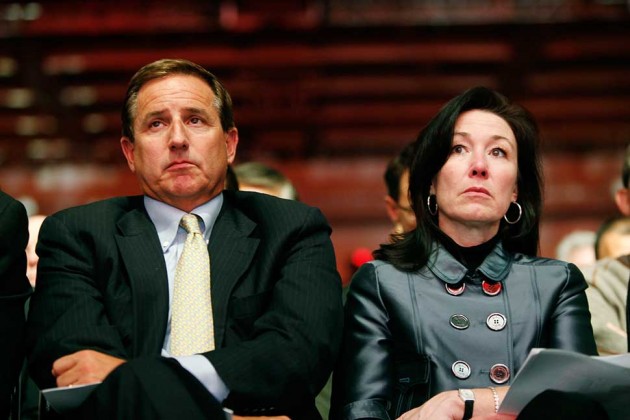
In case you were wondering, Oracle does not have an Indian CEO. Unusually, it has two CEOs – an Israeli woman and an American man – as well as Larry Ellison remaining as CTO and executive chairman. (Not exactly normalized, eh Larry?)

Ms Catz has been leading the Oracle legal battle against Google. No doubt she has Mr Hurd’s full support …


Diane Brady, Oracle Hunger Games: Larry Ellison Creates Co-CEOs (Bloomberg, 19 September 2014)

Julia Powles, Google and Microsoft have made a pact to protect surveillance capitalism (Guardian, 2 May 2016)

Nicky Woolf, Google wins six-year legal battle with Oracle over Android code copyright (Guardian, 26 May 2016)

Claire Zillman, With co-CEOs, companies flirt with disaster (Fortune, 20 September 2016)

Beyond Bimodal

Ten years ago (March 2006) I attended the SPARK workshop in Las Vegas, hosted by Microsoft. One of the issues we debated extensively was the apparent dichotomy between highly innovative, agile IT on the one hand, and robust industrial-strength IT on the other hand. This dichotomy is often referred to as bimodal IT.

In those days, much of the debate was focused on technologies that supposedly supported one or other mode. For example SOA and SOAP (associated with the industrial-strength end) versus Web 2.0 and REST (associated with the agile end).

But the interesting question was how to bring the two modes back together. Here’s one of the diagrams I drew at the workshop.

Business Stack

As the diagram shows, the dichotomy involves a number of different dimensions which sometimes (but not always) coincide.

  • Scale
  • Innovation versus Core Process
  • Different rates of change (shearing layers or pace layering)
  • Top-down ontology versus bottom up ontology (“folksonomy”)
  • Systems of engagement versus systems of record
  • Demand-side (customer-facing) versus supply side
  • Different levels of trust and security

Even in 2006, the idea that only industrial-strength IT can handle high volumes at high performance was already being seriously challenged. There were some guys from MySpace at the workshop, handling volumes which were pretty impressive at that time. As @Carnage4Life put it, My website is bigger than your enterprise.

Bimodal IT is now back in fashion, thanks to heavy promotion from Gartner. But as many people are pointing out, the flaws in bimodalism have been known for a long time.

One possible solution to the dichotomy of bimodalism is an intermediate mode, resulting in trimodal IT. Simon Wardley has characterized the three modes using the metaphor of Pioneers, Settlers, and Town Planners. A similar metaphor (Commandos, Infantry and Police) surfaced in the work of Robert X Cringely sometime in the 1990s. Simon reckons it was 1993.

Asked “Isn’t bimodal new?” … god no. It’s a bad rehash of ideas from a decade or more ago. Even “tri” modal dates back to 1993.

— swardley (@swardley) April 27, 2016

Trimodal doesn’t necessarily mean three-speed. Some people might interpret the town planners as representing ‘slow,’ traditional IT. But as Jason Bloomberg argues, Simon’s model should be interpreted in a different way, with town planners associated with commodity, utility services. In other words, the town planners create a robust and agile platform on which the pioneers and settlers can build even more quickly. This is consistent with my 2013 piece on hacking and platforms. Simon argues that all three (Pioneers, Settlers, and Town Planners) must be brilliant.

absolutely @mjbrender @richardveryard @TheEbizWizard : all three must be brilliant … https://t.co/DHMtkmrgzs

— swardley (@swardley) May 4, 2016

Characterizing a mode as “slow” or “fast” may be misleading, because (despite Rob England’s contrarian arguments) people usually assume that “fast” is good and “slow” is bad. However, it is worth recognizing that each mode has a different characteristic tempo, and differences in tempo raise some important structural and economic issues. See my post on Enterprise Tempo (Oct 2010).

Updated – corrected and expanded the description of Simon’s model.  Apologies for Simon for any misunderstanding on my part in the original version of this post.


Jason Bloomberg, Bimodal IT: Gartner’s Recipe For Disaster (Forbes, 26 Sept 2015)

Jason Bloomberg, Trimodal IT Doesn’t Fix Bimodal IT – Instead, Let’s Fix Slow (Cortex Newsletter, 19 Jan 2016)

Jason Bloomberg, Bimodal Backlash Brewing (Forbes, 26 June 2016)

Rob England, Slow IT (28 February 2013)

Bernard Golden, What Gartner’s Bimodal IT Model Means to Enterprise CIOs (CIO Magazine, 27 January 2015)

John Hagel, SOA Versus Web 2.0? (Edge Perspectives, 25 April 2006)

Dion Hinchcliffe, How IT leaders are grappling with tech change: Bi-modal and beyond (ZDNet, 14 January 2015)

Dion Hinchcliffe, IT leaders inundated with bimodal IT meme (ZDNet, 1 May 2016)

Dare Obasanjo, My website is bigger than your enterprise (March 2006)

Richard Veryard, Notes from the SPARK workshop (March 2006), Enterprise Tempo (October 2010), A Twin-Track Approach to Government IT (March 2011),

Richard Veryard, Why hacking and platforms are the future of NHS IT (The Register, 16 April 2013)

Richard Veryard and Philip Boxer, Metropolis and SOA Governance (Microsoft Architecture Journal, July 2005)

Simon Wardley, Bimodal IT – the new old hotness (13 November 2014)

Simon Wardley, On Pioneers, Settlers, Town Planners and Theft (13 March 2015)

Lawrence Wilkes and Richard Veryard, Extending SOA with Web 2.0 (CBDI Forum for IBM, 2007)

updated 27 June 2016

The Quantum Organization

In road traffic, says my friend @antlerboy, the one with the most momentum has the most responsibility. Perhaps that’s true in other fields too?

Meanwhile, in a hierarchical organization, the one with the highest position has the highest authority. This is known as positional power. Unfortunately, responsibility and authority are not the same thing.

According to Heisenberg’s uncertainty principle, the more precisely the position is determined, the less precisely the momentum can be determined, and vice versa. This is one of the central principles of quantum mechanics.

An analogous problem in most organizations is that responsibility and authority are poorly aligned. In other words, the person who pulls the strings isn’t always the one who gets the blame when something goes wrong. And similarly, the person who does the work isn’t always the person who actually knows how to do it properly. Position versus momentum.

There is a useful technique for organizational analysis known as RAEW (responsibility, authority, expertise and work), which was described by Roger Crane in the 1980s and adopted in some versions of Information Systems Planning. Unlike better-known techniques for responsibility assignment such as RACI, which describe how responsibilities ought to be distributed in an ideal (linear, clockwork) organization, the RAEW technique allows us to analyse how (badly) responsibilities are distributed in a real (chaotic, quantum, snakepit) organization.

And maybe fix some of the problems?


Related Posts: Clockwork or Snakepit? (June 2010)

Wikipedia: Responsibility Assignment Matrix, Uncertainty Principle.

Open University: Handy’s four types of organisational cultures

The vast majority of business tools that I see in use, fail to give you position and movement. I find them useless for context or learning.

— swardley (@swardley) April 8, 2016

Updated 8 April 2016

The Quantum Organization

In road traffic, says my friend @antlerboy, the one with the most momentum has the most responsibility. Perhaps that’s true in other fields too?

Meanwhile, in a hierarchical organization, the one with the highest position has the highest authority. This is known as positional power. Unfortunately, responsibility and authority are not the same thing.

According to Heisenberg’s uncertainty principle, the more precisely the position is determined, the less precisely the momentum can be determined, and vice versa. This is one of the central principles of quantum mechanics.

An analogous problem in most organizations is that responsibility and authority are poorly aligned. In other words, the person who pulls the strings isn’t always the one who gets the blame when something goes wrong. And similarly, the person who does the work isn’t always the person who actually knows how to do it properly. Position versus momentum.

There is a useful technique for organizational analysis known as RAEW (responsibility, authority, expertise and work), which was described by Roger Crane in the 1980s and adopted in some versions of Information Systems Planning. Unlike better-known techniques for responsibility assignment such as RACI, which describe how responsibilities ought to be distributed in an ideal (linear, clockwork) organization, the RAEW technique allows us to analyse how (badly) responsibilities are distributed in a real (chaotic, quantum, snakepit) organization.

And maybe fix some of the problems?


Related Posts: Clockwork or Snakepit? (June 2010)

Wikipedia: Responsibility Assignment Matrix, Uncertainty Principle.

Open University: Handy’s four types of organisational cultures

The vast majority of business tools that I see in use, fail to give you position and movement. I find them useless for context or learning.

— swardley (@swardley) April 8, 2016

Updated 8 April 2016

Update on Deconfliction

The obscure word #deconfliction has started to appear in the news, referring to the coordination or lack of coordination between American and Russian operations in the Middle East, especially Syria.

The Christian Science Monitor suggests that the word “deconfliction” sounds too cooperative, and quotes the New York Times.

“Defense Secretary Ashton B. Carter sharply took issue with suggestions, particularly in the Arab world, that the United States was cooperating with Russia, and he insisted that the only exchanges that the Pentagon and the Russian military could have on Syria at the moment were technical talks on how to steer clear of each other in the skies above the country.”

But that’s exactly what deconfliction is – “how to steer clear of each other” – especially in the absence of tight synchronization and strong coordination.

The Guardian quotes Gary Rawnsley, professor of public diplomacy at Aberystwyth University, who says such jargon is meaningless and is designed to confuse the public. But I think this is unfair. The word has been used within military and other technical circles for many decades, with a fairly precise technical meaning. Obviously there is always a problem (as well as a risk of misunderstanding) when technical jargon leaks into the public sphere, especially when used by such notorious obfuscators as Donald Rumsfeld.

In the current situation, the key point is that cooperation and collaboration require something more like a dimmer switch rather than a simple on-off switch. The Americans certainly don’t want total cooperation with the Russians – either in reality or in public perception – but they don’t want zero cooperation either. Meanwhile Robbin Laird of SLD reports that the French and the Russians have established “not only deconfliction but also coordinated targeting … despite differences with regard to the future of Syria”. In other words, Franco-Russian coordination going beyond mere deconfliction, but stopping short of full alignment.

Thus the word “deconfliction” actually captures the idea of minimum viable cooperation. And this isn’t just a military concept. There are many business situations where minimum viable cooperation makes a lot more sense than total synchronization. We could always call it loose coupling.


Helene Cooper, A Semantic Downgrade for U.S.-Russian Talks About Operations in Syria (New York Times, 7 October 2015)

Jonathan Marcus, Deconflicting conflict: High-stakes gamble over Syria (BBC News, 6 October 2015)

Robbin Laird, The RAF Unleashed: The UK and the Coalition Step up the Fight Against ISIS (SLD, 6 December 2015)

Ruth Walker, Feeling conflicted about deconfliction (Christian Science Monitor, 22 October 2015)

Matthew Weaver, ‘Deconflict’: buzzword to prevent risk of a US-Russian clash over Syria (Guardian 1 October 2015)

Ben Zimmer, In Conflict Over Russian Role in Syria, ‘Deconfliction’ Draws Critics (Wall Street Journal, 9 October 2015)

More posts on Deconfliction

Updated 7 December 2015 

Update on Deconfliction

The obscure word #deconfliction has started to appear in the news, referring to the coordination or lack of coordination between American and Russian operations in the Middle East, especially Syria.

The Christian Science Monitor suggests that the word “deconfliction” sounds too cooperative, and quotes the New York Times.

“Defense Secretary Ashton B. Carter sharply took issue with suggestions, particularly in the Arab world, that the United States was cooperating with Russia, and he insisted that the only exchanges that the Pentagon and the Russian military could have on Syria at the moment were technical talks on how to steer clear of each other in the skies above the country.”

But that’s exactly what deconfliction is – “how to steer clear of each other” – especially in the absence of tight synchronization and strong coordination.

The Guardian quotes Gary Rawnsley, professor of public diplomacy at Aberystwyth University, who says such jargon is meaningless and is designed to confuse the public. But I think this is unfair. The word has been used within military and other technical circles for many decades, with a fairly precise technical meaning. Obviously there is always a problem (as well as a risk of misunderstanding) when technical jargon leaks into the public sphere, especially when used by such notorious obfuscators as Donald Rumsfeld.

In the current situation, the key point is that cooperation and collaboration require something more like a dimmer switch rather than a simple on-off switch. The Americans certainly don’t want total cooperation with the Russians – either in reality or in public perception – but they don’t want zero cooperation either. Meanwhile Robbin Laird of SLD reports that the French and the Russians have established “not only deconfliction but also coordinated targeting … despite differences with regard to the future of Syria”. In other words, Franco-Russian coordination going beyond mere deconfliction, but stopping short of full alignment.

Thus the word “deconfliction” actually captures the idea of minimum viable cooperation. And this isn’t just a military concept. There are many business situations where minimum viable cooperation makes a lot more sense than total synchronization. We could always call it loose coupling.


Helene Cooper, A Semantic Downgrade for U.S.-Russian Talks About Operations in Syria (New York Times, 7 October 2015)

Jonathan Marcus, Deconflicting conflict: High-stakes gamble over Syria (BBC News, 6 October 2015)

Robbin Laird, The RAF Unleashed: The UK and the Coalition Step up the Fight Against ISIS (SLD, 6 December 2015)

Ruth Walker, Feeling conflicted about deconfliction (Christian Science Monitor, 22 October 2015)

Matthew Weaver, ‘Deconflict’: buzzword to prevent risk of a US-Russian clash over Syria (Guardian 1 October 2015)

Ben Zimmer, In Conflict Over Russian Role in Syria, ‘Deconfliction’ Draws Critics (Wall Street Journal, 9 October 2015)

More posts on Deconfliction

Updated 7 December 2015 

The New Economics of Manufacturing

Popped over to Turin this week to give a presentation at a seminar on the Future of Manufacturing.

A lot of the other presentations focused on the technology (3D Printers, Cyber-Physical Systems, Internet of Things), so I wanted to look at the broader economic picture. I drew some inspiration from a recent interview with the French writer Jacques Attali, who predicted the crisis in the music industry.  

“For Attali, music is not simply a reflection of culture, but a harbinger of change, an anticipatory abstraction of the shape of things to come.” (from a review of Attali’s 1985 book Noise)

Attali now says manufacturing will be hit by an identical crisis – this time caused by 3D printing. Apparently some spare parts have already started to appear on pirate websites. Thus instead of paying the manufacturer for a spare part, you might be able to download and print it yourself. Given that many manufacturers sell their products at low margin, in order to make money from spare parts and maintenance, this could seriously disrupt the economics of manufacturing.

By the way, making money from the consumable part of the product is a very old idea – business schools usually attribute the idea to Gillette’s strategy of giving away the razors in order to sell the blades, although Randy Picker argues that the history of Gillette’s innovation was a bit more complicated than the usual story.

There are two possible responses to this challenge. Firstly a shift from the cost of the fabrication to the cost of the materials. The materials used by 3D printers are very expensive compared with normal material. And secondly, designing the whole product to frustrate the use of generic spare parts.

We can see both of these tactics in the world of 2D printers. Printers for home use are really cheap, but the replacement ink cartridges cost almost as much as the printer. Printer ink is the most expensive liquid most people ever buy – much more expensive than good champagne. Or for that matter, human blood. (Not that I’ve ever needed to buy any, thank goodness.)

Which brings us to the second tactic. Yes you can refill ink cartridges or use generic replacements. But the printer can be equipped with software to detect and frustrate this, degrading its performance and efficiency when it detects a third party or refilled cartridge. As we discovered in the Volkswagen “defeat device” scandal, the embedded software in any product may be designed to serve the commercial interests of the manufacturer rather than the consumer.

Manufacturing is shifting away from products (including spare parts) and towards services. Instead of trying to sell you overpriced tyres, the car manufacturer must make sure that only its accredited partners have the software to balance the wheels properly. In other words, not just architecting the product or even the process, but architecting the whole ecosystem.

And of course, music the harbinger. Famous popstars used to do free concerts in order to sell more albums. Now they might as well give away the albums in order to sell more concert tickets.

But we’ve been here before. Attali makes the point that when musicians in the 18th Century – like the composer Handel – started selling tickets for concerts, rather than seeking royal patronage, they were breaking new economic ground. They were signalling the end of feudalism and the beginning of a new order of capitalism.


Related Posts

Defeating the Device Paradigm (October 2015)

Other Sources

Alex Hudson, Is digital piracy possible on any object? (BBC Click, 9 December 2013)

Randy Picker, Gillette’s Strange History with the Razor and Blade Strategy (HBR Sept 2010)

Sam York, The pop star and the prophet (BBC News Magazine, 17 September 2015)

The New Economics of Manufacturing

Popped over to Turin this week to give a presentation at a seminar on the Future of Manufacturing.

A lot of the other presentations focused on the technology (3D Printers, Cyber-Physical Systems, Internet of Things), so I wanted to look at the broader economic picture. I drew some inspiration from a recent interview with the French writer Jacques Attali, who predicted the crisis in the music industry.  

“For Attali, music is not simply a reflection of culture, but a harbinger of change, an anticipatory abstraction of the shape of things to come.” (from a review of Attali’s 1985 book Noise)

Attali now says manufacturing will be hit by an identical crisis – this time caused by 3D printing. Apparently some spare parts have already started to appear on pirate websites. Thus instead of paying the manufacturer for a spare part, you might be able to download and print it yourself. Given that many manufacturers sell their products at low margin, in order to make money from spare parts and maintenance, this could seriously disrupt the economics of manufacturing.

By the way, making money from the consumable part of the product is a very old idea – business schools usually attribute the idea to Gillette’s strategy of giving away the razors in order to sell the blades, although Randy Picker argues that the history of Gillette’s innovation was a bit more complicated than the usual story.

There are two possible responses to this challenge. Firstly a shift from the cost of the fabrication to the cost of the materials. The materials used by 3D printers are very expensive compared with normal material. And secondly, designing the whole product to frustrate the use of generic spare parts.

We can see both of these tactics in the world of 2D printers. Printers for home use are really cheap, but the replacement ink cartridges cost almost as much as the printer. Printer ink is the most expensive liquid most people ever buy – much more expensive than good champagne. Or for that matter, human blood. (Not that I’ve ever needed to buy any, thank goodness.)

Which brings us to the second tactic. Yes you can refill ink cartridges or use generic replacements. But the printer can be equipped with software to detect and frustrate this, degrading its performance and efficiency when it detects a third party or refilled cartridge. As we discovered in the Volkswagen “defeat device” scandal, the embedded software in any product may be designed to serve the commercial interests of the manufacturer rather than the consumer.

Manufacturing is shifting away from products (including spare parts) and towards services. Instead of trying to sell you overpriced tyres, the car manufacturer must make sure that only its accredited partners have the software to balance the wheels properly. In other words, not just architecting the product or even the process, but architecting the whole ecosystem.

And of course, music the harbinger. Famous popstars used to do free concerts in order to sell more albums. Now they might as well give away the albums in order to sell more concert tickets.

But we’ve been here before. Attali makes the point that when musicians in the 18th Century – like the composer Handel – started selling tickets for concerts, rather than seeking royal patronage, they were breaking new economic ground. They were signalling the end of feudalism and the beginning of a new order of capitalism.


Related Posts

Defeating the Device Paradigm (October 2015)
Weaving in Three Dimensions (November 2015)
Right to Repair (March 2017)

Other Sources

Alex Hudson, Is digital piracy possible on any object? (BBC Click, 9 December 2013)

Randy Picker, Gillette’s Strange History with the Razor and Blade Strategy (HBR Sept 2010)

Sam York, The pop star and the prophet (BBC News Magazine, 17 September 2015)

Autumn Events 2015

Open Group Conference – Architecting the Boundaryless Organization

This conference ran from 19th to 22nd of October in Edinburgh.  My talk was on Boundaryless Customer Engagement, and took place on the Monday afternoon. The material was developed in collaboration with my colleague Andrew Forsyth.

The business value of customer analytics and big data is not just about what you can discover or infer about the customer, but how you can use this insight promptly and effectively across multiple touchpoints (including e-Commerce systems and CRM) to create a powerful and truly personalized customer experience.

For most organizations, mobilizing this kind of intelligence raises organizational challenges as well as technical ones. I talked about how some leading companies are starting to address these challenges, and described the vital role of enterprise architecture in supporting such initiatives.

Key takeaways:

  • A reference model for omnichannel consumer analytics and engagement.
  • An architectural approach for closed-loop integration across multiple customer touchpoints and diverse data platforms.
  • A template business case for building and extending your business and technical capabilities for customer engagement. 


    Unicom Data Analytics Forum – Exploring the Business Value of Predictive and Real-Time Analytics

    Was held at the Kensington Hilton in West London on 2nd December.

    My talk was on Real-Time Personalization – Exploring the Customer Genome. Retail and consumer organizations have started to develop more personalized interaction with customers, based on rapid analysis of a broad range of customer attributes and propensities, known metaphorically as “genes”. These may be used to target campaigns more accurately, or to generate the next best action in real-time for a specific customer.

    For more details and registration, please visit the Unicom website.


    Here are the two presentations. There are significant overlaps between the two.