The Monday Morning Challenge of Smart IT

Without exception all industry sectors and corporations are seeking the means to achieve Smart IT. One which delivers effectively, within budget, continues to be relevant, impacts business outcomes positively and provides a competitive edge. This is a …

Multi-Channel Retailing Takes a new Meaning with Retail Apps

Retail Reference Architecture, it’s evolution and real-life pragmatic implementations happens to be one of my key interest area. So far on this blog I have discussed the concept of Retail Reference Architecture, proposed a concise yet complete Simplified Retail Reference Architecture and also shared some of the innovations from real-life implementations of Retailers such as ASOS. As a matter of fact I do follow fortunes of ASOS with great interest. To me this is a bold, new take on the science of retailing (…some might call is an Art of Retailing) which combines best practices from innovator’s such as Amazon.com and presents a unique and deceptively simple business model. This post shares some of my further observations about ASOS and more importantly how they continue to lead the innovative use of Information Technology in the retail space.

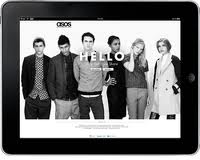
Since summer ASOS  has launched its App for the Apple range of mobile devices. The new service has been designed for iPhone, iPad and iPod Touch users, and along with the function to ‘save for later’ any item of interest sold by the trader, the app also includes a locator for local drop-off points for customers looking to return unwanted purchases.
Free to download, the new app lets you browse and shop directly from fashion editorials, very similar to Net-à-Porter’s. The app comes with trend reports and also contains content originally produced for the online version of the Asos magazine as well as exclusive footage and features such as video and 360-degree views of clothing items. The iPad app is available for free from the App Store since August this year with both Android and iPhone versions scheduled to launch by the close of 2011. 

As the App design James Davie says, “this App design provided a series of new challenges. Most importantly striking the perfect balance between giving the user the familiar ASOS shopping experience, and the equally familiar iPad navigation experience. The final result is a balance of both which should give the user a quick, painless and enjoyable shopping experience.”  Having personally used this App now I can confirm that this is one of the best fashion retailing App available out there with intuitive navigation, fresh content, catalogue, bold designs and just tons of “coolness”! Above the cosmetics, what stands out for me is the fact that, customer accounts are totally synchronised across all of the retailer’s platforms so whether they are using the new apps, the standard website or the mobile site all of their details will remain consistent.
This App and iPad appear to be made for each other and not just a lift-off from ecommerce site made to fit with iPad format. Just to clarify I am not a regular ASOS shopper but as a keen Retail Technology practitioner and follower…this company and it’s innovation are worth watching!

Multi-Channel Retailing Takes a new Meaning with Retail Apps

Retail Reference Architecture, it’s evolution and real-life pragmatic implementations happens to be one of my key interest area. So far on this blog I have discussed the concept of Retail Reference Architecture, proposed a concise yet complete Simplified Retail Reference Architecture and also shared some of the innovations from real-life implementations of Retailers such as ASOS. As a matter of fact I do follow fortunes of ASOS with great interest. To me this is a bold, new take on the science of retailing (…some might call is an Art of Retailing) which combines best practices from innovator’s such as Amazon.com and presents a unique and deceptively simple business model. This post shares some of my further observations about ASOS and more importantly how they continue to lead the innovative use of Information Technology in the retail space.

Since summer ASOS  has launched its App for the Apple range of mobile devices. The new service has been designed for iPhone, iPad and iPod Touch users, and along with the function to ‘save for later’ any item of interest sold by the trader, the app also includes a locator for local drop-off points for customers looking to return unwanted purchases.
Free to download, the new app lets you browse and shop directly from fashion editorials, very similar to Net-à-Porter’s. The app comes with trend reports and also contains content originally produced for the online version of the Asos magazine as well as exclusive footage and features such as video and 360-degree views of clothing items. The iPad app is available for free from the App Store since August this year with both Android and iPhone versions scheduled to launch by the close of 2011. 

As the App design James Davie says, “this App design provided a series of new challenges. Most importantly striking the perfect balance between giving the user the familiar ASOS shopping experience, and the equally familiar iPad navigation experience. The final result is a balance of both which should give the user a quick, painless and enjoyable shopping experience.”  Having personally used this App now I can confirm that this is one of the best fashion retailing App available out there with intuitive navigation, fresh content, catalogue, bold designs and just tons of “coolness”! Above the cosmetics, what stands out for me is the fact that, customer accounts are totally synchronised across all of the retailer’s platforms so whether they are using the new apps, the standard website or the mobile site all of their details will remain consistent.
This App and iPad appear to be made for each other and not just a lift-off from ecommerce site made to fit with iPad format. Just to clarify I am not a regular ASOS shopper but as a keen Retail Technology practitioner and follower…this company and it’s innovation are worth watching!

Gartner: Top 10 Strategic Technologies for 2012

Gartner recently published the top 10 technologies and trends that will be strategic for most organizations in 2012. Gartner defines a strategic technology as one with the potential for significant impact on the enterprise in the next three years. It may be an existing technology that has matured and/or become suitable for a wider range of uses. It may also be an emerging technology that offers an opportunity for strategic business advantage for early adopters or with potential for significant market disruption in the next five years. These technologies impact the organization’s long-term plans, programs and initiatives. They are as following;

Media Tablets and Beyond. Users can choose between various form factors when it comes to mobile computing. No single platform, form factor or technology will dominate and companies should expect to manage a diverse environment with two to four intelligent clients through 2015.

Mobile-Centric Applications and Interfaces. The user interface (IU) paradigm in place for more than 20 years is changing. UIs with windows, icons, menus, and pointers will be replaced by mobile-centric interfaces emphasizing touch, gesture, search, voice and video.

Contextual and Social User Experience. Context-aware computing uses information about an end-user or objects environment, activities, connections and preferences to improve the quality of interaction with that end-user or object.

Internet of Things. The Internet of Things (IoT) is a concept that describes how the Internet will expand as sensors and intelligence are added to physical items such as consumer devices or physical assets and these objects are connected to the Internet.

App Stores and Marketplaces. Application stores by Apple and Android provide marketplaces where hundreds of thousands of applications are available to mobile users. Gartner forecasts that by 2014, there will be more than 70 billion mobile application downloads from app stores every year.

Next-Generation Analytics. Analytics is growing along three key dimensions:

  1. From traditional offline analytics to in-line embedded analytics.
  2. From analyzing historical data to explain what happened to analyzing historical and real-time data from multiple systems to simulate and predict the future.
  3. from structured and simple data analyzed by individuals to analysis of complex information of many types (text, video, etc…) from many systems

Big Data. The size, complexity of formats and speed of delivery exceeds the capabilities of traditional data management technologies; it requires the use of new or exotic technologies simply to manage the volume alone.

In-Memory Computing. Gartner sees huge use of flash memory in consumer devices, entertainment equipment and other embedded IT systems. In addition, it offers a new layer of the memory hierarchy in servers that has key advantages — space, heat, performance and ruggedness among them.

Extreme Low-Energy Servers. The adoption of low-energy servers potentially delivering 30 times or more processors in a particular server unit with lower power consumption vs. current server approaches.

Cloud Computing. Cloud is a disruptive force and has the potential for broad long-term impact in most industries. While the market remains in its early stages in 2011 and 2012, it will see the full range of large enterprise providers fully engaged in delivering a range of offerings to build cloud environments and deliver cloud services.

“These top 10 technologies will be strategic for most organizations, and IT leaders should use this list in their strategic planning process by reviewing the technologies and how they fit into their expected needs,” said David Cearley, vice president and Gartner fellow.

The complete related Gartner press release can be accessed here.

Gartner: Top 10 Strategic Technologies for 2012

Gartner recently published the top 10 technologies and trends that will be strategic for most organizations in 2012. Gartner defines a strategic technology as one with the potential for significant impact on the enterprise in the next three years. It may be an existing technology that has matured and/or become suitable for a wider range of uses. It may also be an emerging technology that offers an opportunity for strategic business advantage for early adopters or with potential for significant market disruption in the next five years. These technologies impact the organization’s long-term plans, programs and initiatives. They are as following;

Media Tablets and Beyond. Users can choose between various form factors when it comes to mobile computing. No single platform, form factor or technology will dominate and companies should expect to manage a diverse environment with two to four intelligent clients through 2015.

Mobile-Centric Applications and Interfaces. The user interface (IU) paradigm in place for more than 20 years is changing. UIs with windows, icons, menus, and pointers will be replaced by mobile-centric interfaces emphasizing touch, gesture, search, voice and video.

Contextual and Social User Experience. Context-aware computing uses information about an end-user or objects environment, activities, connections and preferences to improve the quality of interaction with that end-user or object.

Internet of Things. The Internet of Things (IoT) is a concept that describes how the Internet will expand as sensors and intelligence are added to physical items such as consumer devices or physical assets and these objects are connected to the Internet.

App Stores and Marketplaces. Application stores by Apple and Android provide marketplaces where hundreds of thousands of applications are available to mobile users. Gartner forecasts that by 2014, there will be more than 70 billion mobile application downloads from app stores every year.

Next-Generation Analytics. Analytics is growing along three key dimensions:

  1. From traditional offline analytics to in-line embedded analytics.
  2. From analyzing historical data to explain what happened to analyzing historical and real-time data from multiple systems to simulate and predict the future.
  3. from structured and simple data analyzed by individuals to analysis of complex information of many types (text, video, etc…) from many systems

Big Data. The size, complexity of formats and speed of delivery exceeds the capabilities of traditional data management technologies; it requires the use of new or exotic technologies simply to manage the volume alone.

In-Memory Computing. Gartner sees huge use of flash memory in consumer devices, entertainment equipment and other embedded IT systems. In addition, it offers a new layer of the memory hierarchy in servers that has key advantages — space, heat, performance and ruggedness among them.

Extreme Low-Energy Servers. The adoption of low-energy servers potentially delivering 30 times or more processors in a particular server unit with lower power consumption vs. current server approaches.

Cloud Computing. Cloud is a disruptive force and has the potential for broad long-term impact in most industries. While the market remains in its early stages in 2011 and 2012, it will see the full range of large enterprise providers fully engaged in delivering a range of offerings to build cloud environments and deliver cloud services.

“These top 10 technologies will be strategic for most organizations, and IT leaders should use this list in their strategic planning process by reviewing the technologies and how they fit into their expected needs,” said David Cearley, vice president and Gartner fellow.

The complete related Gartner press release can be accessed here.

6 out of Top 10 Global Brands are IT Companies……is IT COOL Again?

Is Information Technology a COOL Industry to be in? Has “IT” – the silent back-office contributor to the business success finally found it’s rightful place in the Industrial Hierarchy? Well don’t know about that but for consecutive years now a select few IT companies are dominating Top 100 table of Global Brands. In fact according to Interbrand in 2011, 6 out of the top 10 Global Brands are Information Technology companies, up from 5 out of 10 in 2010.

Interbrand should know a thing or two about branding since they are the world’s largest brand consultancy. Here is the top 10 Global Brand table along with Interbrand estimated value of each brand.

# Brand Value ($B)
Comment


 1 71.86
Not an IT company but we love it anyway!

2 69.90
The Big Blue is truly alive and well. The grand old guardian of IT industry has cemented it’s position as the leader by virtue of innovation, R&D, focus on business software.

3 59.08
Surprised to see MS on number three? Well you should not be MS Office, Windows, Explorer still hold near monopoly position in PC market.

4 55.31
Need we say more? Search, Android, Apps, Phone, Business software, Ecommerce, News…Expect to give IBM run for money in future rankings.

5 42.80
Not an IT company but a true pioneer in industrialising science and technology in many ways. Well-deserved position.

6 35.59
Not an IT company but part of staple for our teams for many decades past and I am sure future decades to come.

7 35.21
Another true pioneer of the PC era, well-deserved position no doubt. However need to innovate and fast to catch tablet and smarphone bandwagon.

8 33.49
Innovator’s Innovator. Jumped from 17th position in 2010 to 8th in 2011. Mac, iPod, iPad, iPhone – changed our world, our media and content consumption patterns and re-shaped entire ecosystem. The Ultimate Cool!

9 29.01
Catch them young….and in what a beautiful way! We love this brand and from early years if I may add…

10 28.47
Let recent upheavals not fool you….along with IBM a true cornerstone for the IT industry for many decades. Does need a new identity in fast evolving industry though to make top 10 in next years.