Will Your Organisation Need a CIO by 2020?

The title of my new blog post is provocative. Why would I ask such a question, especially after covering number of CIO surveys, trends, leading CIO thought leaders and underlining the strategic importance of IT in this very blog? I am asking this question because the IT Landscape as you and I know it, is changing and very fast.  Even by IT industry standards the pace of recent developments is remarkable. The business technology is undergoing rapid evolution. And the central argument which I am presenting here is that the conventional role of CIO or CIO function as it stands today will either be ineffective, redundant or out-dated and hence not required by end of this decade. Let me explain…

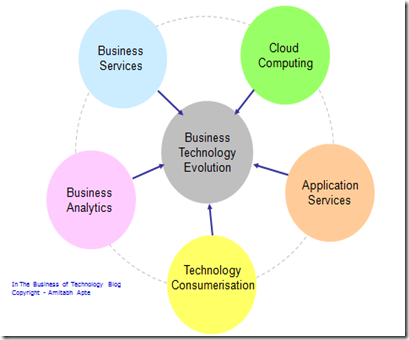
There are a number of reasons and drivers for the rapid evolution of business technology. However according to me there are five major forces which are influencing this evolution. They are Business Services, Application Services, Business Analytics, Consumerisation of IT and Cloud Computing. I will try to explain them briefly  
image

Rise of Business Services – Awareness of the fact that, “Organisations purchase technology to fulfil business needs” is growing like never before. Given economic challenges very few organisations can now justify technology investment for pure technology advantages. Your CEO, COO, CXO and CFO will be demanding “Return on Investment” (ROI) and “Value for Money” (VFM) from each technology $ invested and they will be demanding that most likely in year one. Days of five or even three year technology pay-back are certainly behind us. And this is where purchasing business services independent of large technology investment is becoming so attractive. There are a number of examples of this trend ranging from payment processing to HR processing. Google is taking business services to new dimensions.
 

A test question for you – If you are CEO of a mid-size organisation would you invest $5 Million in back office processing software, hardware, network, back-up, security etc.? Or would you sign up for business outcome based contract with niche business services supplier? I know your answer and mine is the same!
 
Maturing Cloud Computing IndustryEnough is written about benefits of Cloud Computing (including this blog) so I won’t repeat it. However it is safe to conclude that Cloud is more than hype. It is real and there is an entire industry being built around Cloud propositions by all major IT vendors as well as rising number of niche players. Cloud computing if adopted in right manner frees your organisation from capital intensive infrastructure and operations investments. The business justification will not be far different than arguments which I have listed above. Cloud computing however gives organisations added flexibility of building solutions to suit their requirements yet allows them to offload its capital and resource intensive aspects to infrastructure specialists. It can be easily argued that business services are a variant of cloud computing. 
Another test question for you – You are a CFO of retail chain and you have a legacy retail management application. Your peak business transactions are expected only in the months of March, September and December but for all other months you operate at half the transactions of peak. Would you like to scale up and down the capacity and hence the cost of your retail application operations? I know your answer and mine is the same!
 
Business Analytics Coming of Age – A large number of small niche companies and even large companies like IBM and Oracle are investing millions of $ in developing and enhancing business analytics products and services and they are doing this for a very good reason. People like you and me (and multiply that number by millions of Indians and Chinese) are adapting to self-service shopping lifestyle. When was the last time you went into your bank branch? Or when was the last time you bought a book in a book shop? When was the last time you called your airline or visited its city booking office to purchase your airline tickets? I know your answer….we are more and more relying on smart, intuitive ecommerce sites, price comparison sites, shopping portals, kiosks, ATMs, etc. to buy everyday and occasional things of need and desire. The merchants are looking for smarter ways to know you, your preferences, your wish lists and keep your loyalty. This is true for brick and mortar businesses too by the way. And smart merchants are turning to business analytics to make more sense of their business transactions, shopping patterns, supplier dependencies, seasonality and thousands of other trends which affect their business. 

Another test question for you – if you are a mid-size or small company COO running a brick and mortar plus an ecommerce portal for your business would you rely on your in-house MI experts to keep up with 1000s of changing patterns, equations, behaviours and trends? Or would you secure an external niche business analytics company to analyse tons of your business transactions, do the number crunching and present predictions for next quarter along with benchmarks? I know your answer and mine is not too different! 
 
Popularity of Application Services – This may be very specific development but worth making a note of. You may recollect my earlier blog on ASOS and how smartly they are leveraging open access to their applications of catalogues. Apple App Store is another example of this model. These smart technology and business models are making middleware software, hardware and tools almost redundant by giving core access to application tier of your business systems. You suppliers and partners deliver direct to your application and data tier, why bother with message brokering? See my proposed revised retail reference architecture and you will know what I mean. 

Let me not ask you a question but pass you my verdict on this one – No I don’t need an internal IT department to develop interface to launch my catalogue on Apple App Store. I will go to a niche small firm who will do it for me at fraction of cost to much better response times than internal development and test department. 
 
Spread of Technology ConsumerisationAgain enough is said about Apple ipad, Amazon Kindle, and Android smart-phones. The fact is if you are reading this you have either all of minimum one of them. And I know that you will prefer to carry your own ipad to work and do your office email, documents as well look for best place for Thurs after-work drinks on Google map on one of those boring conference calls. And if you organisation is not funding your smart-phone then you do not mind getting on an attractive tariff to join swelling ranks of smart mobile workers of next generation. I am not even mentioning Google Docs, Microsoft Office 365 and other similar offerings which liberate corporate IT. 

You know where I am going next – If your data privacy and security concerns were addressed would you mind if your employees brought their own IT equipment to work? I would not if I am a CFO of a business which made loss of double digit last year and who do not understand why I pay three times for a desk top compared to retail cost of ipad!
 
To summarise my argument – given these very influential forces which are shaping the world of business technology and the fact that they are here and will be growing in their influence….and their strong commercial as well as functional advantages; how long before your conventional CIO function turns into out-dated, ineffective and irrelevant cost centre? If the trajectory of this evolution continues like this, will your organisation need a CIO by 2020? I know your answer and mine is very similar!

Learning by Doing with Labs

Every summer, I spend a week camping with my kids’ Boy Scout troop.  This year, we had the opportunity to camp, hike and fish in the Colorado Rockies near Pike’s Peak. A by-product of a week away from constant email, phone calls and meetings is time to think. A few summers ago, one of these thoughts was how to apply first aid lessons to better project management. This summer’s camp was alongside the South Platte […]

If you liked this, you might also like:

  1. CIO Leadership Stories – Learning to Learn
  2. A CIO’s Own Learning and Development Plan
  3. 3 CTO Role Models

A Model for Literature on Enterprise Architecture

I have been working with several different perspectives on governance, strategy, it architecture and enterprise architecture. I have read several books on the three topics and as such I have been able to build a model for categorizing the literature. … Continue reading

How Innovative Retail Architecture is Boosting Profits at ASOS

Outstanding and outperforming businesses often challenge conventional industry architectures. Such organisations innovate and develop new business models on their way to above-average profits. The online fashion giant ASOS (as seen on screen) has exact…

How Innovative Retail Architecture is Boosting Profits at ASOS

Outstanding and outperforming businesses often challenge conventional industry architectures. Such organisations innovate and develop new business models on their way to above-average profits. The online fashion giant ASOS (as seen on screen) has exactly done this. In one of firsts of the industry, ASOS intends to make free global shipping a “permanent” part of its business model after international sales growth fuelled a 63 per cent jump in sales in the first quarter to £107m. International sales grew 160 per cent to £59.6m in the three months to June 30, and now make up 57 per cent of overall sales. Singapore, Russia and Australia are among the fastest-growing markets. This is impressive compared to UK high street bellwether Marks & Spencer which narrowly beat City expectations recently by declaring a 13% increase in profits in its last financial year. But ASOS business performance looks blockbuster when it is compared to other retail results. For instance the gravity of the high street downturn is spelled out in new research which shows UK retail chains have been closing stores this year at a rate of about 20 a day. The latest figures from accountancy firm PricewaterhouseCoopers show 375 retailers went bust in the second quarter of 2011, a 9% increase on the same period last year. 

So what makes ASOS special? ASOS targets internet-savvy 16 to 34-year-old women looking to emulate the designer looks of celebrities such as Kate Moss, Sienna Miller and Alexa Chung, but at a fraction of the price. While many retailers have struggled against tough macro headwinds, ASOS has prospered, benefiting from a young core customer base and the migration of spending from the high street to the Internet. The firm has a Facebook store and mobile applications. “This is about the shopping experience coming to you. That could be via apps, on your mobile, on Facebook,” said the CEO. “This is the next shift in terms of how we perceive shopping online. Rather than websites that you go to I think it becomes much more part of your personalised web experience.” Compare and contrast this with the fact that, despite huge outlays in the past, the new Marks & Spencer boss is to spend an extra £600m on its UK chain. 

But the unsung hero behind ASOS flight according to me is the innovation which ASOS IT department is bringing to the business. ASOS has crashed the conventional retail reference architecture and brought innovation leveraging the technology advances such as Cloud Computing, Social Media and Consumer Devices. For instance ASOS is assessing how Microsoft’s Azure cloud service could be used to expose mobile data application programming interfaces, which would enable it to extend its reach through mash-ups. Daniel West, IT director, ASOS, has established an IT strategy to build for the cloud first, rather than on-premise. “We look at the cloud first and build if nothing is available.” Daniel West said: “My technology design is to support our international growth. So we need to look at delivery through the cloud.”

image
Innovative Retail Reference Architecture (Revised V2)

See my revised Retail Reference Architecture above which reflects ASOS innovation. (Ref: The original Retail Reference Architecture). The ASOS APIs which power the mash-ups empowers young ASOS customers to bypass traditional Retail Touch Points and Work-flows and access the ASOS catalogue directly. It has merged social networking and shopping by launching the first European fully integrated Facebook Store. ASOS customers are able to buy, save, share and comment on items without needing to leave the social networking site to obtain full e-commerce functionality.

ASOS successfully demonstrate that Industry Reference Architectures are a sound and solid foundation but they are not sacred and should be chopped, changed and innovated to bring dynamic benefits to the business. I am not claiming that innovative Retail Architecture is the only reason behind ASOS success. Smart branding, clear customer segmentation, effective supply-chain and visionary leadership have clearly contributed to ASOS success. However, the contributions from ASOS IT team can not be underestimated in the analysis of ASOS success.

Cloud Computing "Silver Lining" – Business Value Matters. Technology Not!

Microsoft and The Telegraph hosted the “Cloud Computing” Silver Lining event earlier this evening in London. It was a good mix of panel discussions, round-table and networking event. It was hosted at one of the City’s most prestigious landmarks – The Gherkin which with its magnificent views from the 40th floor across the London skyline, was the perfect location to discuss the matters of “Cloud” computing. I was one of the fortunate 50 people who received the invite to listen and engage with a panel of Microsoft, Telegraph and other Industry speakers. I am trying to summarise some of the key thoughts from the evening in this blog post. The headline message which I would like to give here is that, “In Cloud Computing, Business Value Matters, Technology Does Not


Cloud Computing is about Business Innovation – John Jester of Microsoft noted that, Cloud Computing is turning a new corner in 2011. CIOs, CTOs are no longer adopting Cloud Computing purely for cost savings purposes. Increasing number of organisations are now turning to Cloud Computing to gain new capabilities to make business successful. Cloud Computing is leading to new customer engagement models externally while also boosting new ways of employee engagement internally. He cited example of Global Microsoft CIO Summit to drive home the point. While in 2008 most CIOs reported CEO mandate of Cost Reduction, in 2010 most CIOs reported that, now their CEOs are demanding IT to play an Innovation Role. CEOs are now demanding CIOs and CTOs to drive revenue generation and maximisation opportunities. And Cloud Computing is a leading enabler of these innovative business models.

Cloud Computing Liberates IT Consumers – Dr James Bellini, Author and Futurologist commented on how the Cloud Computing paradigm is working on end user computing levels. He likened the Cloud Computing phenomenon as an enabler to free employees to become individuals again and approach and use IT as tool which which liberated not locked them in. He predicted that, “Work prisons of 20th century will disappear by 2020 thanks to the Cloud Computing phenomenon“. But Cloud Computing is not something entirely new. IT industry has seen a number of variations and forms of this over past decades. Close to my heart, the Airline industry has been a pioneer of Cloud Computing for a number of decades when it started to consume the Airline Booking processes per transaction model. Large mainframe operators such as IBM and Unisys served the airlines per Mips based on their consumption. On consumer level, Microsoft Hotmail Service has been in place since 1996 which is prime example of email and collaboration service in cloud. This was one of the question which I posed to the panel. 


So What is New about Cloud Computing Now? – Probably nothing is new in terms of concept. As I outlined in few examples above, the paradigm is around for decades. The major difference driving the adoption (and to some extent Hype) is that Industry has finally caught up with Technology, Tools and Instrumentation required to make Cloud Computing work at mass scale. We agreed at the round-table as well as during networking session that two factors have contributed in a major way to drive the Cloud uptake and popularity. 

  • As John Jester of Microsoft noted, “Anyone is now Connected Anywhere“. The power of network makes cloud consumption easy for large end user computing as well as B2C markets

  • Secondly, as I theorise, the Mobile and Tablet devices have finally crossed the threshold of affordability, intuitiveness, usability and desirability which has enabled business models which demand mass consumption of IT services of various forms on the go

  • Thirdly as  Phill Robinson, CEO, IRIS and Alan Lee-Bourke, CIO, The Wise Group noted the Cloud Computing is a better economic model for enterprises. It allows CIOs and CTOs to pass on the worry of say Server Management, Patching, Wiring, Cabling, Backing up etc to the likes of Microsoft and Fujitsu while they focus on tasks of higher business value for their organisations. Alan for instance noted emphasis on Data Modeling, Reuse and Effective Churn of Information to help business move forward.  
  •  

    Major Cloud Computing Adoption Challenges – Matt Warman of The Telegraph noted and the panel and round-table acknowledged that, Security and Data Integrity are some of the biggest blockers for free-flowing Cloud adoption. Access and Control of Information is a major source of wealth creation of 21’st century hence it is little surprise that data and information assets are targeted by hackers and groups with not so noble intent. But we believe that collectively as industry and individually as responsible organisations these aspects will be sorted with priority. Some of the message from Microsoft Cloud Forum demanded Industry players to work closer together on security standards. While there are now also demands for Government to work a lot closer with Industry on boosting Public Sector Cloud Adoption. 

    The other notable issue raised was difference between commercial models for applications in cloud computing environment vs the collaboration services in cloud. For instance operational, governance and commercial model for making Microsoft Azure and Amazon web services work are of different complexity than say making Office 365 work for enterprise. Both present respective set of challenges but operating model for Cloud in these instances are different. 


    To summarise, momentum seems to be gathering around the fact that Cloud is now seen to enable business rather than just technology development. A great debate at a great location. Many thanks to Matt Warman of the Telegraph and John Jester of Microsoft for hosting a fantastic event!

    Holistic Management in a Context of Enterprise IT Management and Organizational Leadership

    An Approach to Sense Making and Intelligent Business There are probably many different ways to gain sense in each of the many different enterprises and organizations across the planet. This particular paper investigates one particular approach question the validity of … Continue reading