Contrasting Tale of Two Retailers – ASOS and Marks & Spencer

I have been regularly tracking the developments for both these retailers over the past few years on my blogs. But the growing contrast between their performance couldn’t be more obvious than comparison of latest financial performance numbers. To be fair, M&S and ASOS is not a like for like comparison. M&S is your traditional, conventional, respected high street retailer. Probably in league of its own along with only a few other retailers such as John Lewis. While ASOS is the new kid on the block, fresh, young, vibrant and bold online retailer who has challenged every conventional retail wisdom and won almost on all occasions. Both are highly successful and set benchmark in a way for their respective retail segments. Hence the comparison is far more interesting because, in reality this is not so much a comparison between two retailers rather between two different retail business models. 
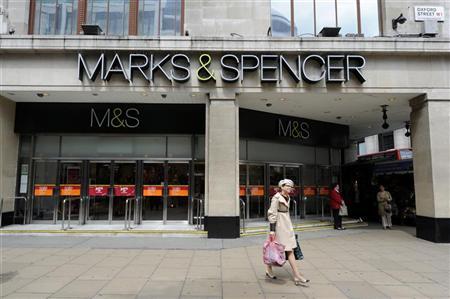
Photo Credit: Reuters/Paul Hackett
As for the actual financial performance, Marks and Spencer have posted the worst trading results in three years, with clothing and homeware down 6.8 per cent. The company said that clothing sales had been affected by stock issues, as well as the wet weather. In the first half of the year, M&S said it had run out of some of the best selling womenswear. These are the weakest set of quarterly figures the retailer has published since spring of 2005. Food sales in the UK rose 2.9pc but this was not enough to offset the slump in general merchandise, dragging total group sales down 0.7pc
Photo Credit: ASOS
In contract ASOS has had an impressive year, posting results ahead of expectations. Profits jumped 43% to £40.9 million. Revenues also showed strong growth, with the company taking £495 million compared with £340 million the previous year. The company’s international business lead the growth, with sales up 103% over the period, while UK sales only grew 7%. Australia, Russia, Singapore and China were highlighted as sales-boosting countries, while new websites were launched in Italy, Spain and Australia.
Above financial highlights drop enough hints about the reasons behind this contrasting performance:
  • Focus on international growth strategy and its successful execution
  • Successful adoption of new and evolving retail technologies
  • Product and portfolio innovation
  • Identification and strategy for growth customer segments
  • Better Supply-Chain integration with new technology distribution models
  • and i am sure there are a few more core retail seasonal trends, weather impact etc.
Let me also qualify my thinking on this blog by stating that though these are contrasting results, I have no doubt that M&S is and will remain one of the strongest retailers of the conventional high street model. And even M&S is implementing a few new technology led multi-channel strategies successfully. However, the new and evolved Retail Reference Architecture continues to differentiate ASOS from its conventional competitors. And to an extent, retailer like ASOS is creating new market places where traditional retailers are struggling to reach and expand. The company’s website attracts 16.6 million unique visitors a month and had 8.7 million registered users at the end of June. Technology is a key enabler for ASOS and this is proven by the fact that, ASOS sells more than 50,000 branded and own-label product lines, with around 1,500 new lines being introduced each week. This is agility in action and this is yet again a classic case study of how technology can truly provide a competitive advantage to business and operations of an enterprise.

References:
ASOS 

How not to do social-business

At the Dachis Social Business Summit, one of the presenters, from Forrester, showed off their notion of the Always-Addressable Customer – combining geolocation and mobile to tailored marketing-messages. The presenter was clearly excited about it, and the two examples she showed…

Watching Hofstadter’s Ants

For every innovation in technology there have been corresponding innovations in how we use information. For a lot of us social media is a ‘meh’ technology. Perhaps we maintain the semi-obligatory Facebook page, tweet our tweeps over breakfast, dabble a bit in Google+, and poke around on Pinterest for gift ideas. If that’s you, you […]

Thinking Differently…. By Design

For years the failure of production IT to deliver fully on its own vision has been in large part due to constantly attempting to solve design problems with management thinking. These days, the abiding anxiety of large-scale production IT is expressed most often through the ‘alignment’ cliche. Forget the specifics for a minute. Suffice to […]

Enterprise Architecture Change is Coming. Are You Ready?

There is an impending change coming. In many ways this change is being driven by the move into The Cloud, (the commoditization of IT) and the move to Bring Your […]

End of "High Street Retail" As We Know It…..

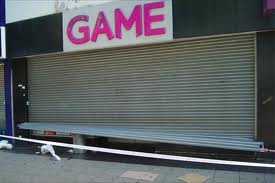
More than 2,000 UK jobs were axed yesterday, as Game Group closed hundreds of shops after the company collapsed into administration. The beleaguered video games retailer, which had 610 UK stores, was unable to meet a £21m second-quarter rental payment due on Sunday and appointed the accountancy firm PwC as administrator. Is this the end of “High Street Retail” as we know it? Is it the beginning of the end? 

The writing was on the wall for Game for some time now. Earlier this month,the struggling video games retailer had confirmed that a number of its suppliers were refusing to do business with the company, sending its shares down 63% to 1.29p. Back then Game said that while it was trying to resolve the matter “as quickly as possible”, it was unsure if its efforts would be successful.

The Game is not the only retail business struggling for the past few years. Almost all high-street retailers have recorded reduced operating margins and profits, if at all they were there. The difficulties at Game are testament to the current squeeze on living costs coupled with a change in shopping habits and games technology. The group has also been battered by competition from cheaper rivals on the internet, such as Amazon and Play.com, and the major supermarkets. Separately, many people now download game Apps direct to tablets or smart phones, rather than buying software to be loaded in to consoles like the PlayStation, xBox on Nintendo Wii.

What the Game story tells us however is something unique where a Technology brand is being eaten by fast evolving technology business models. As Matthew Warman states in the Telegraph, “the story of Game is simply the first taste of what the web is doing to global retail – its products happen to be bought by users who migrated quickly to the web. All other specialist retailers are being challenged online: Whittards, to take just one example, is under pressure from specialist tea and coffee retailers such as Teahorse and Kopi, who will send subscribers superb selections every month, and cater to profitable, premium niches yet don’t have the overheads of high street rents and other associated costs. Many consumers simply see that they don’t have the inconvenience of shopping. Where Game led, even the most aromatic of products is set to surely follow.” 


It was not so long ago that another high-profile retail venture went bust in the UK. It was in November 2011 that, Carphone Warehouse announced that it was to close all of its 11 Best Buy stores across the UK. The first Best Buy store in the UK only opened in April of last year. But the outlets failed to make a profit. Carphone Warehouse and Best Buy initially planned to open 200 Best Buy stores across the UK and continental Europe. But clearly they had to abandon those plans well and truly before they could take-off. Is there market left for technology shopping on UK high-street? Probably there is and there will be always that small niche segment of shoppers who prefer to touch their electronic goods, CDs, Games and likes before they buy them. But that segment is shrinking all the time and internet players will certainly be calling the shots in this segment of Retail market.