Globally Integrated Enterprise 2

In my post on the Globally Integrated Enterprise (June 2006), I reported a comment by James Martin about the growth of the Indian CEO. A few years later, Megha Bahree reported Eight Indian CEOs At Big U.S. Companies (Forbes, December 2009). Now both Microsoft and Google CEOs were born in India. See Harmeet Shah Singh, India-born CEOs are taking the U.S. by storm (CNN MoneyInvest, August 2015).

@juliapowles notes that the relationship between Google and Microsoft started to improve in September 2015, shortly after Sundar Pichai became Google’s chief executive. Coincidence?

Meanwhile, the relationship between Google and Oracle remains tense. Google has just won the latest battle in the ongoing legal war over its use of Java code in the Android operating system.

In case you were wondering, Oracle does not have an Indian CEO. Unusually, it has two CEOs – an Israeli woman and an American man – as well as Larry Ellison remaining as CTO and executive chairman. (Not exactly normalized, eh Larry?)
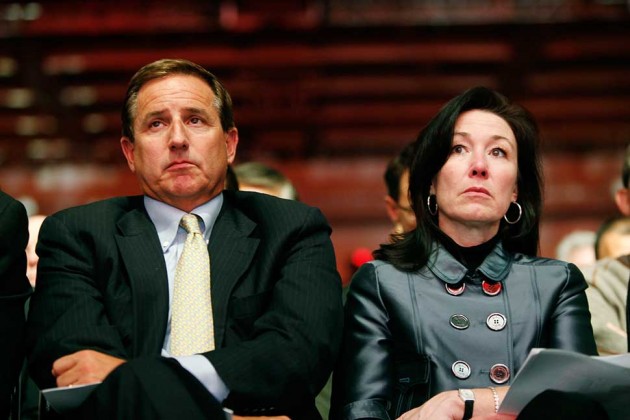
Ms Catz has been leading the Oracle legal battle against Google. No doubt she has Mr Hurd’s full support …


Diane Brady, Oracle Hunger Games: Larry Ellison Creates Co-CEOs (Bloomberg, 19 September 2014)

Julia Powles, Google and Microsoft have made a pact to protect surveillance capitalism (Guardian, 2 May 2016)

Nicky Woolf, Google wins six-year legal battle with Oracle over Android code copyright (Guardian, 26 May 2016)

Claire Zillman, With co-CEOs, companies flirt with disaster (Fortune, 20 September 2016)

Don’t buy ideas. Rent them.

Some ideas are so good. An idea can be good at first glance or after years of digging and testing, or both. When it looks instantly convincing, it just resonates with your experience. There are so many things that such an idea can help you see in a new light, or help you fill some […]

The Business Model represented as an Enterprise Architecture view

continuing
 
A Business Model expressed as a Value Chain would show the sequence of high level processes that add to the margin and accumulate cost at each stage of the chain. 
 
Two different Business Models for the same type …

Dealing with Technical Debt Like We Mean it

What’s the biggest problem with technical debt? In my opinion, the biggest problem is that it works. Just like the electrical outlet pictured above, systems with technical debt get the job done, even when there’s a hidden surprise or two waiting to make life interesting for us at some later date. If it flat-out failed, […]

The Business Model expressed as a Value Chain

continuing
 
While a Business Model (BM) identifies the way a company (activities, resources, channels, partnerships… as described in the BM canvas) returns value/profit while delivering the product, the Value Chain identifies the company s…

Form Follows Function on SPaMCast 395

This week’s episode of Tom Cagley’s Software Process and Measurement (SPaMCast) podcast, number 395, features Tom’s essay on productivity, Kim Pries on “how software developers leverage assimilation and accommodation in the acquisition of knowledge”, and a Form Follows Function installment on accidental innovation. Tom and I discuss my post “Accidental Innovation”. Without an environment that […]