Enterprise Modelling in a few posters (i)
Enterprise Modelling in posters.
continuing from
Enterprise Modelling in a few posters
3. The Models Poster
illustrates the key models
Aggregated enterprise architecture wisdom
Enterprise Modelling in posters.
continuing from
Enterprise Modelling in a few posters
3. The Models Poster
illustrates the key models
Home Depot and Wayfair take leading spots By Brendan Miller and Jennifer Wise You already know Forrester for its iconic Wave graphic that ranks technology vendors on their strategy and capabilities to serve industry clients. Starting today Forrester is…
Here it is a concise Enterprise Modelling (EM) guide in posters.
1. System Modelling Poster
Since the Enterprise is a system, this poster lays the foundations for the Enterprise Modelling approach.
A system is modelled in a sequ…
I took a break from blogging, but am back. So, for anyone who was following me in the past with greatest hits like “TOGAF Study Help – iPhone to the Rescue (perhaps)” and “Pats SOA Governance Perscription“, I’m back. In my new role as Director of Business Development and Strategy, Oracle Cloud Platform – I still wear the hat of an Enterprise Architect all the time. That is to say, I help create and direct programs and strategy that are big-picture and cut across multiple domains and geographies. Sort of an Uber (not the car service company) Enterprise Architecture. So, with that re-introduction out of the way, today’s topic is:
API First – A Strategic Business Architecture!
First off – there are some great blogs on this topic, and this is certainly one of the best out there (by Guy Levin on DZone) that explains the “how” to implement API-First. The article emphasizes that this approach fosters a strong foundation for enabling faster development and that (critically) you need to get the API contract right before teams all jump in as start using a particular API:
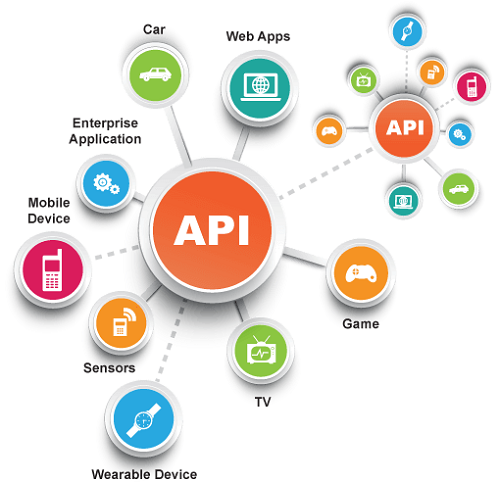
What I have seen in my travels, talking with numerous different companies, managers and developers – is that they are beginning to see that API’s are the doorway to innovation in this Age of Digital Disruption happening right now. If you were asleep or even just blinked, you might have missed the tsunami sweeping the corporate/business landscape, much like The Great Wave off Kanagawa.

As mentioned in the article I referenced above, many large companies like Apple and Google are moving towards an API-centric strategy. When you look at your API’s from a business-standpoint you see that they unlock opportunities and potential that would not be there otherwise. Why? Because API’s are open, lightweight and easy to use – unlike any other integration approach of the past. Even SOA (in it’s typical form) requires heavy-weight WSDL and SOAP – none of which fly with Mobile Developers or modern Application/Microservices Developers. The other HUGE area of innovation is opening up your core competencies and value-chain to partners, but in a light weight fashion that eschews the complexity of EDI.
One of the best quotes I heard from someone I met in my travels recently is; “If it’s not an API, it doesn’t exist.” This really drives home the point that older integration/access approaches are suddenly getting left behind. I will never say that SOA does not have merit, but if you don’t have an API-First strategy in front of your SOA strategy, look out; you will get crushed by the tsunami of change before you have time to realize “what just happened?!?!”.
So, before you buy or build any new IT systems/applications, one of the first questions you need to ask is “How does this support our API-First strategy?” and “What new business opportunities can we leverage now that we have API’s that we could not before?” With that lens, you start to see that business strategy decisions become predicated on the degree to which you have established your API strategy! The two become inexorably linked.
Luckily, Oracle has you covered with the API Platform:
More on that in a future post.
For now, I will leave you with the notion that you should begin thinking about what you could do, that you couldn’t do before, if you had an API-Fist strategy in place. That is how you can make technology (API’s/REST, etc..) super relevant to the business! But, you need to do it right up-front or you will miss the opportunity to ride the tsunami of Digital Disruption.

Data management platforms have been a focal point of discussion this year. Most advertisers I speak to are either deploying or considering the deployment of a DMP to complete their technology stack. Often, their objectives go well beyond media buying. …
Each year, Forrester Research and the Disaster Recovery Journal team up to launch a study examining the state of business resiliency. Each year, we focus on a specific resiliency domain, whether it’s business continuity, IT disaster recovery, or overal…
Please follow this link to listen to the discussion: VPEC-T Discussion A discussion about the VPEC-T thinking framework with an Advertising and Marketing team.After this discussion, the team used VPEC-T to re-examine an Advertising & Mark…
“It would be wrong to think that there is an end date on our digital transformation. We will never go back to how we used to work”. This is how the head of strategic transformation at Poland’s Bank Zachodni WBK thinks about the bank&#…
How can a company receive $1,9 billion in funding, be valuated $6bn and not even have launched a commercial product? There must be some magic here. Precisely! Adi Robertson is right to ask “why do people keep giving Magic Leap money?” One of the obviou…
In recent years, the concept of ‘value stream’ has become increasingly popular. It is a useful element in the toolbox of business architects, and is advocated in, for example, the Open Group Guide to Value Streams and the BIZBOK® from the B…
Change Design: A Story of Digital TransformationNigel Green, Change Designer, 5Di LtdThis is the story of how a major U.K. high street presence that is approaching their digital transformation, and the tangible business benefits of their cloud-enabled …
Search marketing has gone through lots of changes over the past several years. The most significant of those changes is the way that customers search for information, brands, and products — from primarily using Google on desktop computers to usin…