3 Ways Technology is Transforming Care Management

Guest blog by James Selden It’s no secret that the current healthcare system isn’t working. Though well-intentioned, the original model was not built for today’s complex healthcare environment where fragmentation and integration co-exist (see New Health Economy). Private practice physicians proliferated. As a result, the centralized communication needed to deliver a holistic perspective of the patient’s care that would have managed rising costs, improved patient utilization and provided optional health outcomes was never met. While […]

Johnny Cash on Technical Architecure

Yes, that Johnny Cash aka the man in black. He of the deep voice, great songs, San Quentin concert…I was having a cup of coffee at a local Starbucks yesterday when a friend showed me an “architectural diagram” of the technology components that a cust…

Conferentie: Van Vinken Naar Vonken – Ondernemen In De Nieuwe Wereld

Ondernemen op basis van zekerheden bestaat in veel gevallen uit het ‘afvinken’ van lijstjes. Ondernemen in een voortdurend veranderende omgeving vraagt om ‘vonken’, waarbij samenwerkende partijen op het juiste moment krachten weten te bundelen. Deze visie staat centraal tijdens ons seminar op woensdag 12 februari 2014. We geven die dag een podium aan mensen en […]

What if value is in the noise?

image

If thought precedes action, what idea does enterprise architecture move towards? 

The clarity of a signal lifted out of the noise? Tidy cubicles or hacker spaces?

To find a form that accommodates the mess, that that now the task of the enterprise architect.

(Apologies to Beckett).

What if value is in the noise?

If thought precedes action, what idea does enterprise architecture move towards? 
The clarity of a signal lifted out of the noise? Tidy cubicles or hacker spaces?
To find a form that accommodates the mess, that that now the task of the enterprise arc…

My Personal Toolbox

I wrote about my conversion to a Mac back in November of 2010 from my sad, pathetic existence on a Windows-based machine. I’m on my second MacBook — a MacBook Air — and I couldn’t be happier. I wanted to share some of the tools I use on a regular basis with some repeated content from that original post. […]

Building Blocks of Your Enterprise Mobile Strategy

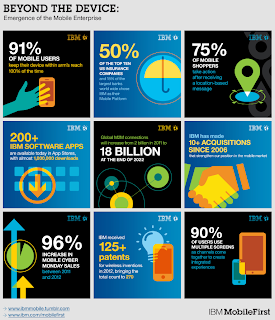
Given my current focus on Multi-Channel architecture & technology programs for Retail and Logistics customer in UK&I, I am often on a look out for new ideas, trends and business case studies. This interest took me to the IBM Enterprise Mobile Summit earlier this week in London Southbank. It was a compact but impressive gathering of Mobile industry experts, suppliers and consumers. It did help me crystallize my thoughts around Enterprise Mobile Strategy which I am trying to summarize in this blog post.   
When an Enterprise (commercial organisation) makes an investment decision to develop a Mobile Strategy (e.g. Mobile Applications or Apps) and related products or services, it should do so based on strategic enterprise intent (or in certain instances tactical response). This investment should take into account a number of stakeholder perspectives such as Functional, Development, Delivery, Operations, End-User Consumer and the Market.


IBM MobileFirst

The Strategic Intent and drivers behind Enterprise Mobile Investment – 
Before committing funds on Mobile strategy a valid question to ask is, what is your Enterprise attempting to achieve by mobile investment? For instance do you see mobile evolving as one of your primary channel to market? Are you attempting to gather insights from mobile data which may provide new opportunities for product and services expansion? 

Or are you simply trying to increase your business transactions though Mobile media. In some instances it may be seen as a media for extending the brand experience for more personal shopping or browsing experience.


The Enterprise Functional Perspective – If the purpose of Mobile strategy is to address internal organisation efficiency then the functional objectives need to focus on employee and organisation productivity enhancement. For instance how can a Mobile App transform, optimise internal work flow and may be also enhance the customer interactions. KPIs here could be reduction of complexity, reduction in wastage, improving quality, faster time to market etc. As I observed in IBM session, some of IBM customers are using the Mobile strategy to extend Enterprise business network in new ways. For instance an Italian organisation leveraged Mobile Apps to find promotions in their network and connected people to these promotions. Michael Gilfix of IBM in this session also cited IBM’s own example of how Mobile strategy is driving next level of productivity by acknowledging its global workforce segmentation.

The Development Lifecycle Perspective – During the session both Michael Gilfix of IBM and Jessica Figueras, a Mobile Industry Analysthighlighted a point that there is a difference between creating conventional Apps and Mobile Apps. Mobile development and developers need to understand the Mobile App consumption patterns, workflows and user interaction in different ways. IBM briefly shared their Mobile Development Lifecycle process which comprises of iterative phases such as; Design & Develop, Instrument, Integrate, Test, Scale & Certify, Deploy, Manage, Obtain Insight and back to Design & Develop. Jessica made a good point that Mobile Apps are becoming more and more complex and they need Enterprise Architecture underpinning them to be successful.


The IT Delivery and Operations Perspective – The above point about Enterprise Architecture requirements extends into the Operational and Delivery aspects of IT too. Challenge of Fragmentation is particularly important; how best to serve different fragmented devices to serve multi-channel experience which is a different challenge that Web Apps where one size often fits all consumers. Michael was also keen to point our Security and Access control aspects such as Loss of control over distribution, impact of BYOD, Control of data and access as code often would run in environment outside of Enterprise control. From the customer satisfaction perspective, the end-user of Mobile Apps will look out for and increasingly expect consistent multi-channel experience. e.g. Airline – phone, kiosk, in-flight, travel experience.

The consumer perspective: Creating compelling mobile user experience – Ali Al-Shakarchi, the UX Architect and Strategist from IBM had some very interesting themes on this perspective which can be argued as the most important factor to make Mobile strategy successful. He highlighted the fact that, user expectations are high and user tolerance is low when it comes to Apps as the competition is fierce, an alternative App is a tap away. Some of the tips which Ali shared were; Stay Relevant, Keep it simple, Build richer experience, Think innovation, Optimise for mobile, Create end to end experience, Be more social and evolve on an ongoing basis in a smart way.

Some of the demos / case studies during the session further underlined some of above points. The Barclays Pingit case study and how it is driving the C2C is a prime example of how Apps can bring success and create new Operating Models for large Enterprises. While the Tealeaf demo effectively showcased the power of analytics behind smart Mobile strategy. 


One of the key takeaway for me was, Why limit Mobile conversations to IT? Focus must be on exploring business opportunities & enhancing business capabilities”. Iwould like to congratulate IBM for putting together a smart, effective and useful summit. I certainly hope to apply some of the above lessons learnt for my customers in Retail and Logistics in near future. 

For more on IBM Mobilefirst read here

Building Blocks of Your Enterprise Mobile Strategy

Given my current focus on Multi-Channel architecture & technology programs for Retail and Logistics customer in UK&I, I am often on a look out for new ideas, trends and business case studies. This interest took me to the IBM Enterprise Mobile Summit earlier this week in London Southbank. It was a compact but impressive gathering of Mobile industry experts, suppliers and consumers. It did help me crystallize my thoughts around Enterprise Mobile Strategy which I am trying to summarize in this blog post.   
When an Enterprise (commercial organisation) makes an investment decision to develop a Mobile Strategy (e.g. Mobile Applications or Apps) and related products or services, it should do so based on strategic enterprise intent (or in certain instances tactical response). This investment should take into account a number of stakeholder perspectives such as Functional, Development, Delivery, Operations, End-User Consumer and the Market.


IBM MobileFirst

The Strategic Intent and drivers behind Enterprise Mobile Investment – 
Before committing funds on Mobile strategy a valid question to ask is, what is your Enterprise attempting to achieve by mobile investment? For instance do you see mobile evolving as one of your primary channel to market? Are you attempting to gather insights from mobile data which may provide new opportunities for product and services expansion? 

Or are you simply trying to increase your business transactions though Mobile media. In some instances it may be seen as a media for extending the brand experience for more personal shopping or browsing experience.


The Enterprise Functional Perspective – If the purpose of Mobile strategy is to address internal organisation efficiency then the functional objectives need to focus on employee and organisation productivity enhancement. For instance how can a Mobile App transform, optimise internal work flow and may be also enhance the customer interactions. KPIs here could be reduction of complexity, reduction in wastage, improving quality, faster time to market etc. As I observed in IBM session, some of IBM customers are using the Mobile strategy to extend Enterprise business network in new ways. For instance an Italian organisation leveraged Mobile Apps to find promotions in their network and connected people to these promotions. Michael Gilfix of IBM in this session also cited IBM’s own example of how Mobile strategy is driving next level of productivity by acknowledging its global workforce segmentation.

The Development Lifecycle Perspective – During the session both Michael Gilfix of IBM and Jessica Figueras, a Mobile Industry Analysthighlighted a point that there is a difference between creating conventional Apps and Mobile Apps. Mobile development and developers need to understand the Mobile App consumption patterns, workflows and user interaction in different ways. IBM briefly shared their Mobile Development Lifecycle process which comprises of iterative phases such as; Design & Develop, Instrument, Integrate, Test, Scale & Certify, Deploy, Manage, Obtain Insight and back to Design & Develop. Jessica made a good point that Mobile Apps are becoming more and more complex and they need Enterprise Architecture underpinning them to be successful.


The IT Delivery and Operations Perspective – The above point about Enterprise Architecture requirements extends into the Operational and Delivery aspects of IT too. Challenge of Fragmentation is particularly important; how best to serve different fragmented devices to serve multi-channel experience which is a different challenge that Web Apps where one size often fits all consumers. Michael was also keen to point our Security and Access control aspects such as Loss of control over distribution, impact of BYOD, Control of data and access as code often would run in environment outside of Enterprise control. From the customer satisfaction perspective, the end-user of Mobile Apps will look out for and increasingly expect consistent multi-channel experience. e.g. Airline – phone, kiosk, in-flight, travel experience.

The consumer perspective: Creating compelling mobile user experience – Ali Al-Shakarchi, the UX Architect and Strategist from IBM had some very interesting themes on this perspective which can be argued as the most important factor to make Mobile strategy successful. He highlighted the fact that, user expectations are high and user tolerance is low when it comes to Apps as the competition is fierce, an alternative App is a tap away. Some of the tips which Ali shared were; Stay Relevant, Keep it simple, Build richer experience, Think innovation, Optimise for mobile, Create end to end experience, Be more social and evolve on an ongoing basis in a smart way.

Some of the demos / case studies during the session further underlined some of above points. The Barclays Pingit case study and how it is driving the C2C is a prime example of how Apps can bring success and create new Operating Models for large Enterprises. While the Tealeaf demo effectively showcased the power of analytics behind smart Mobile strategy. 


One of the key takeaway for me was, Why limit Mobile conversations to IT? Focus must be on exploring business opportunities & enhancing business capabilities”. Iwould like to congratulate IBM for putting together a smart, effective and useful summit. I certainly hope to apply some of the above lessons learnt for my customers in Retail and Logistics in near future. 

For more on IBM Mobilefirst read here

Rational Rationalization – Part the First

With the upheaval of the economic downturn came a spate of mergers, acquisitions, divestitures, splits and buy-outs. The ensuing chaos of the resulting technology portfolios cannot really be overstated. Many surviving companies are just a mess. In norm…