Moving house, redecorating…

Yes, a very different look to this website: I’ve moved. (Well, in virtual-terms, anyway). I’d had long-running problems with my previous hosting-provider, and was running out of space there anyway, so it was time to move to something with a

Big Data, Social, Mobile, Cloud and… Case Management?

These days, it seems that business and IT conversations just about everywhere are revolving around that same 4 themes – Big Data, social collaboration, mobile applications and cloud computing. These IT megatrends are in the forefront of the minds of IT executives and solution providers alike. And, if you aren’t thinking about them, you should […]

Related posts:

  1. Being Human: Why Knowledge Workers Need Adaptive Case Management How important is the human factor in driving meaningful process…
  2. The New iWorker Meets Adaptive Case Management IT organizations are faced with a growing set of user…
  3. Human vs. Machine: How Adaptive Case Management Helps Insurance Firms Serve Customers Have you seen the movie Real Steel? In the storyline…

Related posts brought to you by Yet Another Related Posts Plugin.

The project-related concerns of Enterprise Architecture

Using the analogy of the popular game of Tetris, this diagram explains the dynamic and ever-changing challenges of Enterprise Architecture through the use of a static picture. This diagram was originally created to explain the need for Enterprise Architecture to business executives at the C-Level of an organization (e.g. CEOs, CIOs, CFOs, etc.). The original […]

Enterprise Architecture Benefits

Author: Alex Matthews – Twitter: @remembermytweet Here is a free, un-formatted slide deck that describes some of the key benefits that can be gained from applying Enterprise Architecture. It can […]

#ogChat Summary – Walled Garden Networks

Didn’t catch the walled garden tweet jam? Here is the official summary of the event. Continue reading →

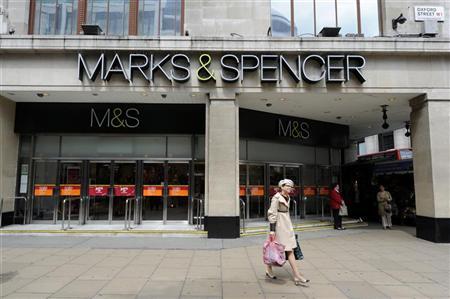
Contrasting Tale of Two Retailers – ASOS and Marks & Spencer

I have been regularly tracking the developments for both these retailers over the past few years on my blogs. But the growing contrast between their performance couldn’t be more obvious than comparison of latest financial performance numbers. To be fair, M&S and ASOS is not a like for like comparison. M&S is your traditional, conventional, respected high street retailer. Probably in league of its own along with only a few other retailers such as John Lewis. While ASOS is the new kid on the block, fresh, young, vibrant and bold online retailer who has challenged every conventional retail wisdom and won almost on all occasions. Both are highly successful and set benchmark in a way for their respective retail segments. Hence the comparison is far more interesting because, in reality this is not so much a comparison between two retailers rather between two different retail business models. 
Photo Credit: Reuters/Paul Hackett
As for the actual financial performance, Marks and Spencer have posted the worst trading results in three years, with clothing and homeware down 6.8 per cent. The company said that clothing sales had been affected by stock issues, as well as the wet weather. In the first half of the year, M&S said it had run out of some of the best selling womenswear. These are the weakest set of quarterly figures the retailer has published since spring of 2005. Food sales in the UK rose 2.9pc but this was not enough to offset the slump in general merchandise, dragging total group sales down 0.7pc
Photo Credit: ASOS
In contract ASOS has had an impressive year, posting results ahead of expectations. Profits jumped 43% to £40.9 million. Revenues also showed strong growth, with the company taking £495 million compared with £340 million the previous year. The company’s international business lead the growth, with sales up 103% over the period, while UK sales only grew 7%. Australia, Russia, Singapore and China were highlighted as sales-boosting countries, while new websites were launched in Italy, Spain and Australia.
Above financial highlights drop enough hints about the reasons behind this contrasting performance:
  • Focus on international growth strategy and its successful execution
  • Successful adoption of new and evolving retail technologies
  • Product and portfolio innovation
  • Identification and strategy for growth customer segments
  • Better Supply-Chain integration with new technology distribution models
  • and i am sure there are a few more core retail seasonal trends, weather impact etc.
Let me also qualify my thinking on this blog by stating that though these are contrasting results, I have no doubt that M&S is and will remain one of the strongest retailers of the conventional high street model. And even M&S is implementing a few new technology led multi-channel strategies successfully. However, the new and evolved Retail Reference Architecture continues to differentiate ASOS from its conventional competitors. And to an extent, retailer like ASOS is creating new market places where traditional retailers are struggling to reach and expand. The company’s website attracts 16.6 million unique visitors a month and had 8.7 million registered users at the end of June. Technology is a key enabler for ASOS and this is proven by the fact that, ASOS sells more than 50,000 branded and own-label product lines, with around 1,500 new lines being introduced each week. This is agility in action and this is yet again a classic case study of how technology can truly provide a competitive advantage to business and operations of an enterprise.

References:

Contrasting Tale of Two Retailers – ASOS and Marks & Spencer

I have been regularly tracking the developments for both these retailers over the past few years on my blogs. But the growing contrast between their performance couldn’t be more obvious than comparison of latest financial performance numbers. To be fair, M&S and ASOS is not a like for like comparison. M&S is your traditional, conventional, respected high street retailer. Probably in league of its own along with only a few other retailers such as John Lewis. While ASOS is the new kid on the block, fresh, young, vibrant and bold online retailer who has challenged every conventional retail wisdom and won almost on all occasions. Both are highly successful and set benchmark in a way for their respective retail segments. Hence the comparison is far more interesting because, in reality this is not so much a comparison between two retailers rather between two different retail business models. 
Photo Credit: Reuters/Paul Hackett
As for the actual financial performance, Marks and Spencer have posted the worst trading results in three years, with clothing and homeware down 6.8 per cent. The company said that clothing sales had been affected by stock issues, as well as the wet weather. In the first half of the year, M&S said it had run out of some of the best selling womenswear. These are the weakest set of quarterly figures the retailer has published since spring of 2005. Food sales in the UK rose 2.9pc but this was not enough to offset the slump in general merchandise, dragging total group sales down 0.7pc
Photo Credit: ASOS
In contract ASOS has had an impressive year, posting results ahead of expectations. Profits jumped 43% to £40.9 million. Revenues also showed strong growth, with the company taking £495 million compared with £340 million the previous year. The company’s international business lead the growth, with sales up 103% over the period, while UK sales only grew 7%. Australia, Russia, Singapore and China were highlighted as sales-boosting countries, while new websites were launched in Italy, Spain and Australia.
Above financial highlights drop enough hints about the reasons behind this contrasting performance:
  • Focus on international growth strategy and its successful execution
  • Successful adoption of new and evolving retail technologies
  • Product and portfolio innovation
  • Identification and strategy for growth customer segments
  • Better Supply-Chain integration with new technology distribution models
  • and i am sure there are a few more core retail seasonal trends, weather impact etc.
Let me also qualify my thinking on this blog by stating that though these are contrasting results, I have no doubt that M&S is and will remain one of the strongest retailers of the conventional high street model. And even M&S is implementing a few new technology led multi-channel strategies successfully. However, the new and evolved Retail Reference Architecture continues to differentiate ASOS from its conventional competitors. And to an extent, retailer like ASOS is creating new market places where traditional retailers are struggling to reach and expand. The company’s website attracts 16.6 million unique visitors a month and had 8.7 million registered users at the end of June. Technology is a key enabler for ASOS and this is proven by the fact that, ASOS sells more than 50,000 branded and own-label product lines, with around 1,500 new lines being introduced each week. This is agility in action and this is yet again a classic case study of how technology can truly provide a competitive advantage to business and operations of an enterprise.

References:
ASOS 

I seem to be drawing a lot of pyramids lately. This one was…

I seem to be drawing a lot of pyramids lately. This one was drawn to help give some focus to a discussion about introducing a brand new function into an organisational unit. There was a lot of discussion around requirements at different levels of capab…

Categories Uncategorized

How to avoid common mistakes with your EA program Part II

Part II: Focus on business value, not the tool
by: Bill Cason – Troux CTO – July 10th, 2012 
When enterprises realize they have a complex problem, the easiest response is to think: We just need a “tool”. This is the second …

Categories Uncategorized

EA in the icefjord

Enterprise Firn and Other Excuses Retreat for CxOs and enterprise architects Ilulissat, Greenland 24-28 August 2012 Join me at this special location in exploring the concept enterprise firn and other emerging concepts in enteprise architecture. Located on the west coast of Greenland, 250 km north of the Arctic Circle, Greenland’s Ilulissat Icefjord is the sea mouth …read more