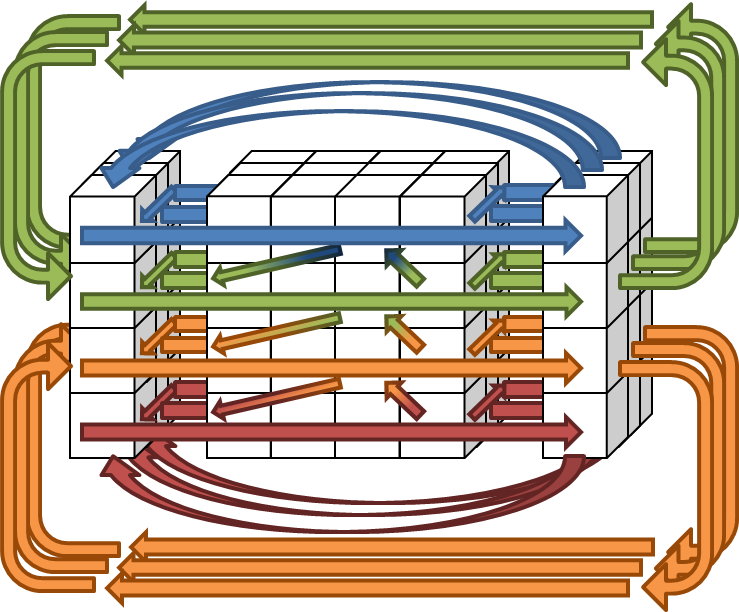
I have read an interesting Blog Post from Paul Wallis about Asset failure and flow wich focusses on the physical elements. I really enjoyed reading the post and I can only encourage you to also read it with care. It furthermore triggered me to think and write again about the flow of events through an Enterprise. I will pick up quotes from the mentioned blog post and reflect on them by creating a collision of ideas to my social EA thinking.
When key flows – water, electricity, natural gas or sewage – are interrupted in an urban area, our lives become very difficult, very quickly. Interruptions to these critical flows will often cause knock-on interruptions to dependent secondary flows, impacting things like flows of people, flows of vehicles, or flows of goods through supply chains. Flows of data are no less vulnerable to interruption caused by unexpected interactions with other types of flow.
As I have written in GLUE Disease one of my main approaches is to look at the key flow (of knowledge) and especially into dysfunctions of that flow. If I find a dysfunctions I try to optimize the flow of knowledge direct or indirect depending on the given situation. If I am successful the achieved better flow of knowledge through the Enterprise will lead to better decisions.
But in today’s digital world, risk lies not only in the failure of IT assets that directly enable data to flow, but also in the failure of other less obvious business assets: a leaky door, a de-pressurised cable, a failed valve or a broken pump.
As I have written in People in GLUE what really matters are the people. They make the difference and they in the end form the real flow of events. Processes and Methods do help, but what really makes the difference are the people.
If the people fail there is no process and method available (at least for EA not) to secure the success and an optimal information flow. Therefore I personally focus on the people first. Of course there is a certain amount of processes and methods needed (to help the people working better), but as written in the agile manifesto: Individuals and interactions over processes and tools. Of all the assets available, people are the biggest and therefore should be threated according to that.