The State of CIO: 50 Things to Know Before Becoming CIO
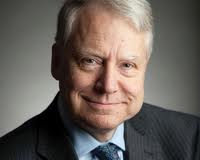
Paul Coby is one of the most successful and admired CIO of our times. He was instrumental in launching a number of innovative passenger friendly technologies at British Airways. Paul has been credited with launching a number of “Airline industry first” applications such as Online Booking, Online Check-in and recently mobile boarding pass for British Airways. And this while reducing the cost of IT Operations by 60% over a period of 10 years.


So when the invite of La Fosse Event featuring him arrived, I was keen to attend. It was a high quality event as previous La Fosse events have been. Paul’s presentation revolved around key concepts from his book, “50 Things I Wish I Would Have Known Before Becoming a CIO”. Essentially it was a “Lessons Learnt” from the practiotioner on the essentials of being a CIO. The session was interactive, complete with anecdotes based on his rich experience and was followed by valuable Q&A session. Some of the key concepts which Paul shared were;

How to Approach the CIO Role? 

  • Enjoy being a CIO
  • Plan time strategically
  • Don’t be afraid of technology
  • Operational performance matters so focus on it
  • There are no IT projects only business projects
  • Understand your industry and love itAppoint IT business partner who will champion business 
  • Communicate Communicate – Project IT performance across business
  • Benchmark your performance
  • Become non-executive director in other business to understand board expectations

How to Keep the IT function Running Smoothly
·         Keep IT simple
·         Be visible as IT function and celebrate success
·         Enter business transformation space
·         Eliminate shadow it dept in business
·         Become champion of business simplification
·         Innovate
·         Really be part of your company

How to Push Boundaries of the Role
·         Know where IT should be: Leading edge, Fast follower and Commodity
·         Use your authority and power as a CIO
·         Understand your CEO’s business strategy and support it
·         Develop supportive relations with fellow directors
·         Spend time with board members
·         Reduce cost of IT year on year
·         Work closely with HR, Finance

How to Manage Teams Effectively
·         Develop direct reports
·         Ensure you have genuine technology experts in your team
·         Value PA and core team
·         Grow project and program management skills
·         Recognise importance of Operations team and people
·         Get IT organisation structure right

How to Ensure Success in Execution
·         Personally review projects
·         Subdivide team into subgroups
·         Have clear objectives
·         Look after pennies
·         Monitor audit reports
·         Reward who delivers
·         Suppliers mater
·     Enforce technology standards – They will reduce complexity, hence cost and improve speed to delivery
·         Develop win-win


In addition to this Paul also talked about a few evolving aspects of the job such as;

Future Trends to watch out for a CIO
·         Computerisation – Everything is an APP and easier to use
·         Connectivity – Everyone connected: Things, People, Processes
·         Convergence – Above plus location and things awareness
·         Collaborate – Tools for us to connect work and pay and in between things
·         Cloud – Commodatisation of IT

What will see a CIO through in 2011?
·         Focus on real customers
·         Getting onto business strategic agenda
·         Loving the technology
·         Cutting he cost
·         Managing suppliers
·         Leading your people

Many thanks and well done to La Fosse team for pulling together another high quality event. Simon if I may suggest, no harm in starting events management company in addition to core recruitment business! šŸ™‚ Already looking forward to next event!


Achieving Operational Excellence

In my postĀ last Monday, I discussed that if you leverage enterprise architecture (EA) disciplines and solutions during the business process design phase of your business process management (BPM) projects you can better discover what your best practices are.Ā  However, establishing visibility into your operations, and understanding how and why the top performers and departments in […]

Related posts:

  1. Uncovering Process Excellence Achieving process excellence is possible. To do it you can…
  2. Six Strategies for a Successful Center of Excellence Few organizations, less than 20% according to a recent study…
  3. Metastorm Customers Speak Out on Business Process Improvement Its back! Today Metastorm reveals real-world insights from organizations speaking…

Related posts brought to you by Yet Another Related Posts Plugin.

RBP-EA: There’s gonna be a revolution…

This is part of a series of posts that I’ll be doing about ā€˜The Really Big Pictureā€˜ at a societal/economic level, in relation to enterprise-architecture.
This post sets out some of the scope and scale of the changes that are or are likely to be coming up on the horizon over the next few years and/or […]

Its always about the business (or mission)

So yesterday the follow-worthy @chrisonea lobs this question on Twitter:
Is there any circumstance under which IT should build a thing without a business purpose?
I emphatically answered, NO. Here’s why.
Long ago when the last of the punch card machines were dispatched to the junkyards and the IT department was still called Data Processing, I was in college. Being an IT wannabe, I enrolled in my first COBOL course. Dr. Barone was my instructor and took us through all that verbose quasi-English that produced reports on green bar paper in the lab. Aside from COBOL, he taught us a bit about the relationship between the business and IT. IT, he contended, exists to serve the business and not the other way around. He was rather emphatic about it. We were not at liberty to code our hearts out like some painter with a canvas. We were to fulfill requirements. Nothing more. Nothing less. Sir, yes sir!
This idea has always stuck with me. Whether working in internal IT departments or producing software for external clients. Even in the latter case the software exists solely to achieve an objective for the client’s business. It especially resonates well as I focus on enterprise architecture. 
If I were to rationalize an IT portfolio of applications or middleware, I still rationalize at the behest of the business. There is a realizable benefit that can be articulated in business terms. Reduced operating costs through simplification in this case. Every CFO and CEO understands that language. Even if I were to “build it and they will come” (speculation), there would still be some business outcome I’m seeking such as revenue generation.

Yes, ITs still about the business. Period.

The difference between a Business Architect and a Business Analyst

I was recently asked what I thought was the difference between a Business Architect and a Business Analyst. Broadly speaking I see the difference as being similar to the difference between an Enterprise Architect and a Solution Architect. i.e. one works at a Strategic level across the whole enterprise and the other works at a project […]

Uncovering Process Excellence

Achieving process excellence is possible. To do it you can start by bringing together the top performers within your organization to capture what it is that makes them good at what they do. This isn’t always easy because many top performers can’t always easily articulate the underlying reason for their success. We see these top […]

Related posts:

  1. Six Strategies for a Successful Center of Excellence Few organizations, less than 20% according to a recent study…
  2. Pharmaceutical company recognized for process excellence Today we are proud to announce that, AmerisourceBergen – one…
  3. Metastorm Customers Speak Out on Business Process Improvement Its back! Today Metastorm reveals real-world insights from organizations speaking…

Related posts brought to you by Yet Another Related Posts Plugin.

RBP-EA: From ā€˜Really Big Picture’ into real-world practice

This continues the themes of the previous posts, ā€˜The Really Big Picture for enterprise-architectureā€˜ andĀ RBP-EA: The dangers of business-centric ā€˜enterprise’-architecture.
Much like strategy, enterprise-architecture is one of the few business-disciplines that explicitly focusses on the mid- to longer-term future. As such, one of the unfortunate side-effects is that much of what we do is at risk […]