EA Heuristic #2: Guess, Validate, Iterate: Time-bound architectural efforts
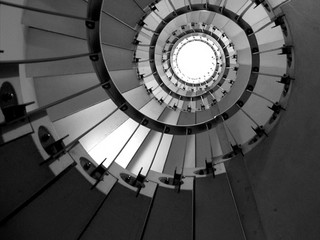
The spiral.  Architectural efforts should use this shape as the guide, doing quick iterations that each bring the effort closer to the end goal, but never getting held back from progress by attempts for perfection.
photo credit: the pale side of insomnia

(this article is part of the series “12 Heuristics for Enterprise Architecting“)

It is very difficult to document various aspects of an organization to the lowest level of detail or even to document the high level views correctly. To begin with, people have different views of the organization so the one correct viewpoint might not exist. As such, it is important to recognize that EA artifacts are living documents and they will never be 100% accurate. 

Consequently, time-bound architectural efforts to ensure consistent progress. Guess and validate later when there is missing information. Allow for iterations to gradually refine EA artifacts.

In our EA exercise, we planned a survey early in the exercise to solicit information on stakeholder importance. The organization rejected the survey, so we created the stakeholder importance chart based on our assessment. During subsequent presentations, the organization’s executives provided inputs that helped us refine the chart. Reflecting on the incident, it would have caused us unnecessary time and grief if we did not move on but instead wait on getting that chart right first.

Management Architects and Enterprise Architecture

Gary Hamel’s new book, What Matters Now: How to Win in a World of Relentless Change, Ferocious Competition, and Unstoppable Innovation, is marketed as “an impassioned plea” to “reinvent management as we know it” and “rethink the fundamental assumptions we have about capitalism, organizational life, […]

Video Highlights of Day 2 at the Cannes Conference

Video recap of Day 2 of The Open Group Conference in Cannes by Peter Haviland, E&Y. Continue reading →

Thank you Jeanne Ross

Hooray hooray hooray! – the message is finally getting through! This from an interview with MIT-CISR‘s Jeanne Ross in the current (29 April 2012) online edition of CIO.com: Myth: CIOs should own enterprise architecture. Not so fast. CIOs often wind up accountable for the entire enterprise architecture, despite not typically having the authority or vantage point […]

There’s no short-cut to experience

At least he was open about it, I guess. “Tell you what I’ll do”, he says to my colleague here in Guatemala, “I’ll find you a client, then I’ll sit in, learn everything you do, and then I’ll apply it in my own business. How does that sound to you?” Uh, no. Not a good […]

Is the EA the DJ?

A lovely one-liner and follow-up from Kevin Smith (of PragmaticEA / PEAF fame), in a Skype conversation earlier today: Is the EA the DJ? He doesn’t tell people how to dance. He provides the music for them to dance to. He sets the mood. He sets the tempo. http://www.youtube.com/watch?v=oq71rV2FXSI http://www.electronicarchitecture.co.uk Listen. Feel. Connect. Interact. Imagination. […]

Twin-Track Architecture

#entarch This post follows discussions with Graham Berrisford of Avancier about the relationship between Enterprise Architecture (EA) and Solution Architecture (SA).

What seems to make sense is to describe EA/SA as a twin-track process (similar to th…

It’s not a cycle

If it’s not a cycle, don’t call it a cycle. In the past few days I’ve had a fair bit of struggle to get clients to understand the difference between a linear-sequence with a beginning, a middle and an end, versus a true cycle where the end of one sequence links to or becomes the […]

Cannes Conference Day 2: Proactively Engaging in the Transformation Process Paramount for Enterprise Architects

The Open Group Cannes Conference Day 2 recap, highlighting plenary sessions by Dr. Saeed Al Daheri, United Arab Emirates Ministry of Foreign Affairs; Peter Haviland, Mick Adams and Garth Emrich, Ernst & Young’s Advisory Services; and Judy Cerenzia,…

EA Heuristics #1: Looking for gaps? Push from top, guide from bottom.

A police helicopter.  Police helicopter helps police gets a big picture of the city, so that the police knows what to focus on.  The police still need to rely on people on the ground for details.  A situation similar to the heuristic described in this article.
photo credit: metropolitan police
(this article is part of the series “12 Heuristics for Enterprise Architecting“)

When looking for gaps in the current stage architecture, a useful approach is start by “pushing from the top”—start with the enterprise’s strategic objectives, then use the objectives’ linkages with other views to assess if there are any gaps, and then gradually move down through views level by level.

It is important to start the search for gaps from the top, as gaps more closely related to enterprises’ strategic objectives would be uncovered first. This approach decreases the likelihood of missing important gaps or being distracted by less important ones.

While pushing from the top, it is useful to “guide from bottom”—use anecdotal evidence to focus the search for gaps. During our EA exercise, we gathered a number of pain points through conversations with the organization’s employees and reviewing customer satisfaction survey results. However, when we did the analysis by “pushing from the top”, we were puzzled as we could not find those pain points. We analyzed the issue further, focusing on areas where the anecdotal pain points should have shown up, and finally realized that it was because there were missing metrics, and this discovery helped us uncover a second issue—the metrics were not granular enough.  If not for the knowledge of the pain points from “the bottom”, our “push from the top” analysis would have yielded nothing.