The 10,000 Hour Rule

What is the secret to being really good. What makes a good Programmer, Business Analyst, Admin, or Architect? Does it require superb instruction, years of isolation, physical prowess, intellectual giftedness, and a burning desire emanating from a chi…

Efficiency, effectiveness and co-creativity

This one is a pick-up from a Tweet by Bert van Lamoen: transarchitect: The priority shift we make is from efficiency to effectiveness to co-creativity. #complexity Of course. Yes. That’s obvious, the moment I look at it. Except that I’d completely missed before now. Oops… I’ve long since drawn a distinction between efficiency and effectiveness. […]

Q&A Series: The Future of EA and BPA

Today I’m continuing my Q&A series on frequent questions asked about enterprise architecture and business process analysis tools. Over the past few months there has been a lot of chatter around the future of EA and BPA. Here’s another installment on the future of this market and the best way to leverage these tools to […]

Related posts:

  1. Q&A Series: The Value of EA and BPA In November and December, Gartner released the Magic Quadrants for…
  2. Impacting Business with Enterprise Architecture: What the Future Holds for EA Efforts Cliché as it may be, I can’t stop myself from…
  3. The Future of Social BPM Over the years organizational development processes have evolved to meet…

Related posts brought to you by Yet Another Related Posts Plugin.

First Technical Standard for Cloud Computing – SOCCI

By E.G. Nadhan, HP The Open Group just announced the availability of its first Technical Standard for the Cloud – Service Oriented Cloud Computing Infrastructure Framework (SOCCI), which outlines the concepts and architectural building blocks necessa…

Keynes Vs. Hayek in Enterprise Architecture

A recent article that appeared in the Economist – The World in 2012 entitled “Keynes vs Hayek in China” inspired a few thoughts and questions on how similar the practice of Enterprise architecture was with the art of defining a country’s econom…

Keynes Vs. Hayek in Enterprise Architecture

A recent article that appeared in the Economist – The World in 2012 entitled “Keynes vs Hayek in China” inspired a few thoughts and questions on how similar the practice of Enterprise architecture was with the art of defining a country’s economic policy.

The article considers how John Maynard Keynes’s “General Theory” and Friedrich Hayek’s ideas continue to influence and to mold modern day Chinese economic policy. In a nutshell, even though Keyne’s theories were considered capitalist and not relevant with communist ideals, these ideas were embraced by Hu Jintao and Wen Jiabao who championed massive stimulus packages to foster entrepreneurial employment and thus economic growth. But Xi Jinping and Li Kepiang (Hu and Wen’s most probable successors) will probably embrace Hayek’s (Keynes’ arch-nemesis) view when considering current economic instabilities. Hayek states that massive investments in projects will undoubtedly lead to an increasing number of “malinvestments” (risky investments that won’t necessarily bear fruit). These will undermine investor confidence in difficult times and stifle future investments thus increasing the risk of economic downturn.

What lessons can EA architects and CIOs draw from these events? Can a parallel be found between the practice of EA within a company and the way economic policy is established and carried out, especially in times of economic crisis? Are tough economic circumstances an obstacle to the practice of EA or on the contrary a driver to gain more leverage? 

Parallels between EA and macro-economics

Before continuing any further on, it is necessary that I define what I understand by Enterprise Architecture or EA for short.

I have a personal preference for the following definition: Entreprise Architecture is a continuous practice that seeks to describe and understand an organization from all aspects (cultural, sociological, functional, and technical) and their relationships to each other and the environment. Overcoming complexity, inducing change that is motivated by the delivery of business strategy and increasing agility, resilience and sustainability of the organisation are EA’s primary objectives.

So what exactly does this practice share with macro-economic policy?
A country, similarly to an organisation,  is a diverse melting pot of individuals each striving to achieve their own goals amidst countless variables such as natural events, politics, external market conditions, innovation, other individuals, etc. just to name a few. Politicians and policy makers strive so as to understand, master and steer “the chaos”. An ambition equally shared by enterprise architects.

Undoubtedly, the driving forces, the scale and the tools are very much different. But the broader goal remains the same: ensuring the proper realization of policy and objectives so as to achieve greater flexibility, efficiency, robustness, longevity and profit while assuring the operational status.

Balancing this delicate equation has preoccupied economists and leaders and recent short comings of financial markets is a clear indication that there is still matter to cover. But surely EA can learn something from all of this.

The key ingredients
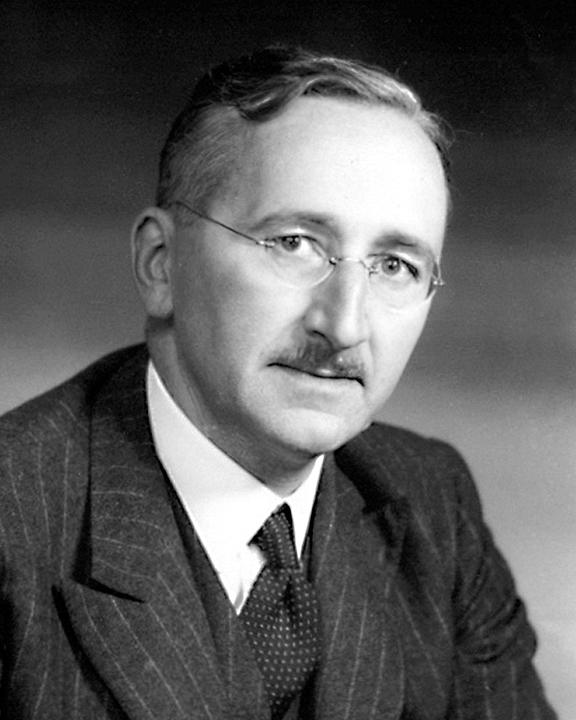
Enterprise architecture can be compared to a large infrastructure project lead by a country which seeks to transform the economic bloodlines of a company. Is enterprise architecture a risky investment in times of difficulty? Should CxOs take or should not take a Keynesian stand towards EA?

The backing EA will get from the CIOs depends entirely to which degree they view EA as a “malinvestment” or not. In times of economic downturn, CIOs will seek to ensure their viability of their decisions when faced with less funding. When faced with this challenge, an architect’s goal is to prove that EA can deliver not only the long term but also short term tangible results.

EA is uniquely fine tuned to be able to answer to this. But I believe that there are 2 key ingredients that will continue to ensure the sustainability of EA’s results. These ingredients are: To what degree can the company’s strategic goals live up to the new economic circumstances? Does EA continue to be backed up consistently by the organisation’s key stakeholders (CxOs, operational managers, etc.)?

Strategic goals evolve. It is best if they evolve under ambition but external constraints also have to be taken into account. Thus goals have to be revised especially during hard times. And EA can play a key role by advising the decision makers on the implication of various scenarios so that they may make a fully informed decision.

The faith and confidence that business leaders place in EA is also vital. EA has the capability to induce transformation on an organization’s structure and business, but such change can be realised if there isn’t a sustained driving force behind. The simplest way to gain confidence is to demonstrate the benefits. Thus architects need to be especially keen on the valuation of their suggestions which is no easy task.

Furthermore, hard times can be an opportunity to innovate. Innovation and change is driven by need, by lack of satisfaction and constraint. A company where all is well often doesn’t feel the need to change. Why should it? Stability does not foster change. EA can gain leverage on the need for change to push forward.

The promises that EA can deliver

When the previous two ingredients are present, how should EA react? “The art of war” of Sun Tzu holds a possible answer: prioritising and concentrating ones effort on a single tangible goal with promising gains.

EA can consolidate, prioritise and ensure that the actions that are taken strive to achieve the overall goals. Combining EA with frameworks like IT CMF and COBIT, it is possible to fully measure and control this impact, an impact that is even more important in challenging circumstances. Of course, there are certain prerequisites that have to be met. The more mature a company is in defining and governing its internal processes and EA practice, the easier it will be to gain leverage on them.

I would personally like to view harsh economic conditions as an opportunity for change. Organizations with a lot of money often have the worst practice of EA. The investment banking sector is good example. A CIO should be stingy with his funds but generous with his support of EA. And with a pragmatic architect who can identify “malinvestements” and tangible profit areas, we just might have a winning combination and a means to beat the market.

****************************************

I feel that there is still matter for thought on this subject. This is my first rudimentary attempt to piece together my ideas. I will try and publish a more detailed article on this topic after a little more research. Please feel free to share your views and ideas with me!
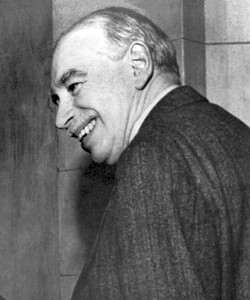
Photo Credits :

http://en.wikipedia.org/wiki/John_Maynard_Keynes

http://en.wikipedia.org/wiki/Friedrich_Hayek

Tweet: 
Categories Uncategorized

More on identity and Mask

Who or what is ‘I’? How does our experience of ‘I’ change as we interact with our world? Yes, I do know that those questions might seem to fit more in philosophy or psychology. But as per the previous post, they also have huge ramifications in user-experience and user-interface design, in product-design, in sensemaking and […]

Q&A Series: The Value of EA and BPA

In November and December, Gartner released the Magic Quadrants for Enterprise Architecture (EA) and Business Process Analysis (BPA) respectively.  We thought we’d discuss some of Gartner’s observations about trends in both EA and BPA along with many questions we’ve heard from our customers and prospects over the years.  We are thrilled about our leadership positions […]

Related posts:

  1. Who Drives an Enterprise Architecture Initiative? Who drives an enterprise architecture initiative? Does it come from…
  2. Achieving Operational Excellence In my post last Monday, I discussed that if you leverage…
  3. Thoughts from Gartner Enterprise Architecture Summit Last week, Gartner’s US Enterprise Architecture Summit in San Diego…

Related posts brought to you by Yet Another Related Posts Plugin.

Double Nature of Enterprise Architecture

If a song would count as my own signature song it would be Double Nature by my favorite Swedish band Mustasch. And isn’t that nice that it matches so well with what I feel about enterprise architecture! On one side you have business strategy and on the other side technology details. A true double-natured creature… I […]

Categories Uncategorized