“Data” is a big topic for many organizations. It may not come as a surprise that a lot is being said and written about using / securing / managing data. From a technical perspective, topics that are increasingly popular are big data, open data, and linked data, frequently in conjunction with security management, privacy, and business impact. More and more business forums also write about data.
Here are some highlights from last week’s news in the Netherlands (most of these are in Dutch):
What is interesting about these articles is the fact that the focus seems to shift away from the traditional ‘systems thinking’ and towards data  and business impact. This seems to fit well with the growing realization that “systems are temporary, but data is forever”. Take for example the articles about Customer Relationship Management (CRM). Over the last few years, many organizations have updated their CRM capability – including systems and processes – many times. A switch in systems typically means migrating data, something that is often seen as a one of the (technically) most challenging aspects of a system upgrade due to a change in standards, definitions, data structures and so on.
Data issues, benefits of managing data as an asset
The good news is that this hard work typically has big benefits: many issues with data quality become visible during (or: shortly after) migration. Perhaps the following sounds familiar:
-
Records about key entities (such as customer, or product) are incomplete. There may be missing data about key attributes so the new system will not accept these records. Where does the missing data come from?
-
We find out that data is incorrect: there is a mismatch between what we think is true according to the data, and what can be observed in reality.
-
 Data may be inconsistent: we have multiple records (which are potentially inconsistent) about our customers. Why is this the case? Can we reconcile these records? How does that affect different groups in our organization, such as Marketing, Sales, Finance, or the delivery organization?
-
We are once more faced with the challenge that we have different definitions of key concepts. For example, Marketing and Finance have a different definition of “Customer”. Therefore, when management compares reports about Customer from these two functions, there have always been inconsistencies (which may or may not have been ‘fixed’ with all sorts of local solutions based on extensive use of spreadsheets).We now have to buckle up and come to a standardized definition, or choose to re-develop or local solutions…
The list goes on and on. the good news, though, is the increased attention for managing data as an asset. John Ladley frames it nicely. Data is ‘the new oil’ for many organizations. Like oil, data can be dangerous. If you don’t manage it properly then it may explode.
Maturity
Over the last few months we have conducted many interviews with organizations around data management, and maturity of the data management capability. We have developed a “data management maturity scan” which is based on the DAMA DMBOK. This experience confirms the trend that we have just identified: there is a trend to take data management seriously and invest in the maturity of the data management capability. Some key findings:
-
Several organizations report that ‘culture’ is a key aspect in being successful with data. If the culture is all about systems (in Dutch: “probleempje systeempje” – which loosely translate to “build a new system for each problem”) then nothing will change.
-
We see some organizations take a “technology route” to solving data issues: start with tooling around meta data, data quality management etcetera, and “experiment” in projects to see what can be achieved. This is a minority.
-
More and more organizations focus on outcomes: what do we want to get out of our data? What do we need to make that happen? Based on goals and principles, sound investments in the data management capability can be made.
-
Handling (large volumes of) unstructured (and highly volatile) data has a lot of potential. However, most organizations recognize that this requires a more advanced capability than handling structured (“rows and columns”) data.
-
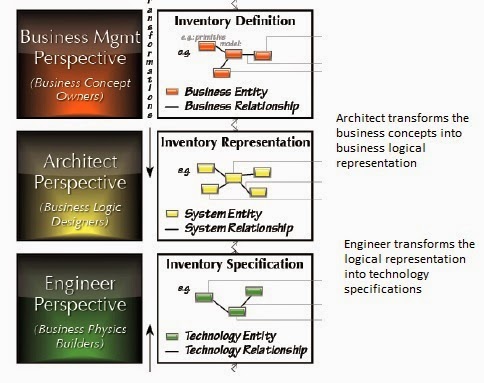
Ignoring some notable exceptions from recent engagements with one client, many organizations are starting to recognize the value of business-focused models of the data landscape: yes, it requires an investment, but the resulting models are almost a condition cine qua non for data management
Food for thought
 So what does all this mean for you / your organization? As in so many domains, there is no silver bullet that will magically solve all your data problems. There is no cookie cutter approach: there are no answers, only (more and more) questions. Therefore, we offer some “food for thought”, some questions to answer in the context of your organization. First of all: have a look at your change portfolio, and focus on IT. How many of the upcoming projects are around “fixes”, around “stuff that has gone wrong with data” that we are now trying to fix? If you have figured this out, ask yourself the follow-up question: who is my go-to guy for data? Do I trust IT enough to fix my data issues, or should this be done by a data steward who truly understands the business?
Try to create a simple business case: do a quick “back of the napkin” assessment of how many hours per week a typical employee is busy with data issues (searching for missing data, fixing broken data, reconciling duplicate and inconsistent data, etcetera). Multiply this by the number of staff and an average salary to get a sense of how much bad data is costing you.
Focusing more on benefits: do you know which business entities are crucial for running day to day business? Also, does management have a solid understanding of processes, associated KPI’s, and the reports / dashboards / scorecards that go with it? Suppose we need new (BI-related) insights, how quickly can we typically deliver? Can we also show (i.e., in case of an audit) that we’re in control with respect to managing this data as a crucial business asset? Or would someone get really nervous when that question is asked…?
Of course we’ll gladly assist you in assessing where you are with respect to data. Our two-day course in Enterprise Data Management can, combined with a data management maturity assessment, be a great kick-start for getting the most out of your data!